 Seattle
 Deck Repair Built for Ravenna's Weather, Not a National Checklist
Ravenna sits inland enough to avoid the worst of Puget Sound's salt spray, but it still gets the same long, wet Pacific Northwest winters as the rest of Seattle — months of low-intensity rain, short daylight, and shaded yards under mature trees that keep decks damp long after a storm has passed. That combination of moisture and shade is exactly what accelerates wood decay, softens fasteners, and turns a small maintenance item into a structural repair if it sits too long. A deck repair approach that works in a dry climate, or even in a sunnier Seattle neighborhood, doesn't automatically work here. Ravenna's tree canopy and older housing stock mean we see specific, repeatable failure patterns, and our repair process is built around them.
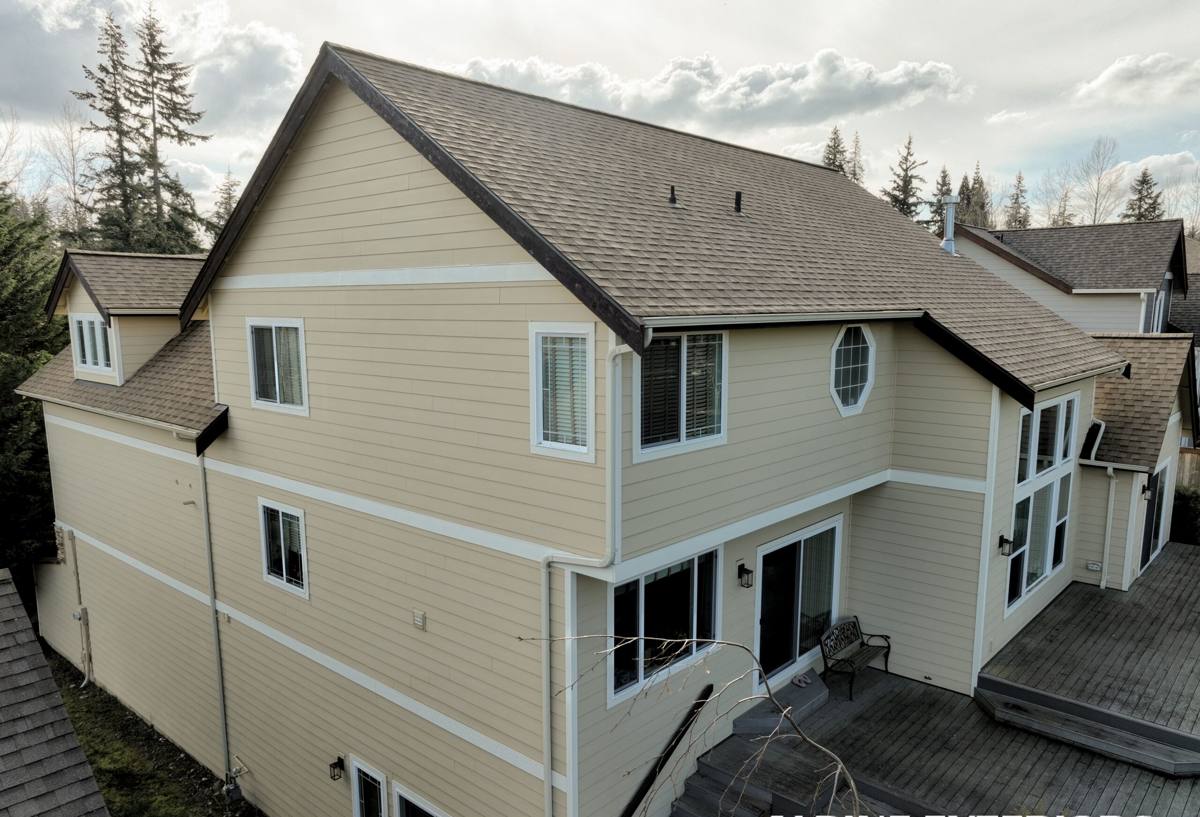
What Ravenna's Climate Does to a Deck
King County's wet season isn't dramatic — it's persistent. That's the part that catches homeowners off guard. A single hard rain dries out in a day or two. Seattle's pattern of light rain, overcast skies, and limited direct sun means decks can stay damp for a week or more at a stretch, especially on the north or east side of a house or under tree cover, which describes a lot of Ravenna's older lots.
Moss and Organic Growth
Moss doesn't just look bad — it holds water against the wood surface and finish, which is the opposite of what you want. On flat deck boards, moss and algae buildup in the wood grain and between boards traps moisture at the exact point where rot starts. A "long moss season," as it's often described here, really means an extended window every year where organic growth has the time and moisture it needs to establish itself before things dry out.
Driving Rain and Wind-Driven Water
Wind off the Sound and through the neighborhood's tree lines pushes rain sideways at times, forcing water into joints, under railings, and behind ledger flashing that would stay dry in a straight-down rain. This is one of the more overlooked causes of hidden rot — the water intrusion point often isn't where the damage shows up.
Freeze-Thaw Cycling, Even in a Mild Climate
Seattle doesn't get deep freezes often, but it gets enough freeze-thaw swings each winter to matter. Water that's already trapped in a joint or a checked board expands when it freezes, widening cracks and loosening fasteners. Over a few winters, that's enough to turn a tight joint into a loose one.
Where We Find Problems First on Ravenna Decks
After years of repair work across Seattle neighborhoods with similar tree cover and moisture exposure, the failure points are consistent enough to check every time, in this order:
- Ledger board connection — where the deck attaches to the house; the single most common source of hidden rot because water runs down the siding and collects right at this joint
- Support posts at ground contact — especially posts set in or near soil rather than clear of grade, where moisture wicks upward
- Joist ends — tucked under decking, rarely inspected, and often the first place rot sets in because they don't dry between rain events
- Railing posts and baluster connections — repeated wetting and drying loosens fasteners, and this is also a safety-critical area
- Board-to-board gaps — too tight, and they trap debris and moisture; this is often a construction-quality issue as much as a weather one
- Stair stringers — high-traffic, high-flex components that show wear and water damage faster than flat decking
How We Assess a Deck Before Quoting Anything
We don't quote deck repair sight unseen, and we don't quote it off a five-minute walk-around either. A proper assessment takes time because most of the damage that matters is invisible from the surface.
Visual and Moisture Inspection
We look at the whole structure — decking, framing, railings, stairs, and the ledger connection — and use moisture readings on wood that looks suspect. A board can look fine on top and be soft underneath; the only way to know is to check.
Probing Structural Members
We physically probe joists, the ledger, and posts with an awl or screwdriver in spots where rot is likely. Wood that should resist a firm push and instead gives way tells us more than a visual scan ever will.
Fastener and Connector Check
Older decks around Seattle were often built with fasteners and hardware that don't meet current corrosion standards, especially in decks built before updated code requirements took hold. We check for rust streaking, loose connections, and hardware that's failing even where the wood around it still looks sound.
Honest Scope, in Writing
We tell you what's cosmetic, what's maintenance, and what's structural — and we don't blur those categories to make a bigger sale. If a repair can reasonably wait a season, we say so.
What a Correct Deck Repair Actually Involves
Deck repair isn't one job — it's a range of work depending on what's actually failing. Here's how we think about matching the fix to the problem.
| Repair Type | Typical Cause in This Climate | What the Fix Involves |
|---|---|---|
| Board replacement | Cupping, soft spots, moss-driven rot on flat surfaces | Remove and replace affected boards; check the joists underneath before closing back up |
| Ledger board repair | Water intrusion from missing or failed flashing | Remove decking near the ledger, correct flashing, replace any rotted framing, reseal the connection |
| Post or footing repair | Ground contact moisture, undersized or failing footings | Isolate post from soil contact, replace compromised wood, confirm footing is sound |
| Railing and baluster repair | Loosened fasteners from repeated wet-dry cycling | Re-secure or replace hardware, replace any split or rotted components, confirm code-height compliance |
| Joist sistering | Localized rot at joist ends under decking | Add a new joist alongside the damaged one rather than full frame replacement, when structurally appropriate |
| Full surface refinish | UV and moisture breaking down existing finish | Clean, treat for moss/mildew, and reseal or refinish once repairs are complete |
Composite, Cedar, or Pressure-Treated — What Repair Looks Like for Each
Ravenna has a mix of older cedar decks, pressure-treated framing under newer surfaces, and a growing number of composite deck boards. Each behaves differently when it's damaged, and that changes the repair approach.
Cedar
Cedar resists rot better than most softwoods but isn't immune, especially where finish has worn thin or moss has been left to sit. Repairs usually mean matching grain and weathering as closely as possible, since a bright new board next to years-old cedar stands out until it weathers in.
Pressure-Treated Lumber
Most deck framing in this area is pressure-treated, which resists rot well when installed and finished correctly — but the treatment doesn't make it waterproof, and cut ends exposed during construction are a common weak point if they weren't re-treated at the time.
Composite Decking
Composite boards resist rot in the material itself, but the substructure underneath is still almost always wood, and composite's tendency to trap moisture against the framing below means the hidden structure can be failing even while the surface looks perfect. We always check the framing on a composite deck repair, not just the boards.
Repair vs. Replacement — How We Help You Decide
Not every deck with a problem needs to be torn out. But there's a point where patch repairs stop making financial sense.
- If damage is isolated to a few boards, posts, or a section of railing, targeted repair is usually the right call
- If the ledger connection has significant rot, or if multiple structural members are compromised, a broader rebuild of that section may cost less over time than repeated patches
- If the deck is original to an older Ravenna home and has never been opened up for inspection, there's real value in a one-time thorough repair now rather than reactive fixes every year or two
- Age of the deck matters less than how it was built and maintained — we've seen newer decks with worse problems than well-maintained older ones
Why Local Experience in Ravenna Specifically Matters
Deck repair advice that's generic to "the Pacific Northwest" misses details that are specific to a neighborhood like Ravenna — tree cover density, typical lot drainage, and the age and construction style of the housing stock all shape what we expect to find before we even start the inspection. A crew that works this area regularly recognizes patterns faster: which builders' framing choices from a given era tend to hold up, which flashing details were commonly skipped, and how a particular yard's shade and drainage will affect a repair's long-term durability. That translates into a faster, more accurate assessment and a repair scope that's right the first time, rather than one that gets revised mid-project.
Maintenance That Extends the Life of a Repair
A repair is only as good as what happens to the deck afterward. A few habits make a real difference in this climate:
- Clear moss and debris from board gaps at least once a year, ideally before the wet season sets in
- Keep gutters and downspouts clear so runoff isn't dumping extra water onto or near the deck
- Check and re-tighten railing hardware annually — it loosens gradually and isn't always obvious until it's a safety issue
- Reseal or refinish on the schedule appropriate to the material, not just "when it looks bad"
- Keep vegetation trimmed back from the deck edge to improve airflow and drying time
If you're seeing soft spots, moss buildup, loose railings, or you just haven't had your deck looked at in a few years, we're happy to come take a look. Estimates are free, there's no pressure to move forward, and you'll get a straight answer about what actually needs attention — use the form below to get started.