 Seattle
 Columbia City's Climate Is Harder on Siding Than It Looks
Columbia City sits inland from Puget Sound, but it still gets the full weather pattern that defines exterior work across King County: long stretches of driving rain from fall through spring, humid air that never fully dries out, and moss that finds a foothold on anything shaded or north-facing. Add in the salt-laden air that moves through the greater Seattle area off the Sound, and you have a combination that steadily degrades siding that isn't built or installed for it.
Many homes in Columbia City date back to the early-to-mid 1900s, with a mix of craftsman bungalows and mid-century infill sitting on lots with mature trees. Mature tree cover is great for curb appeal and shade, but it also means more standing moisture, more debris in gutters and against wall lines, and more shaded siding that stays damp longer after every storm. That's exactly the environment where the wrong siding choice — or a correct product installed poorly — starts failing years ahead of schedule.
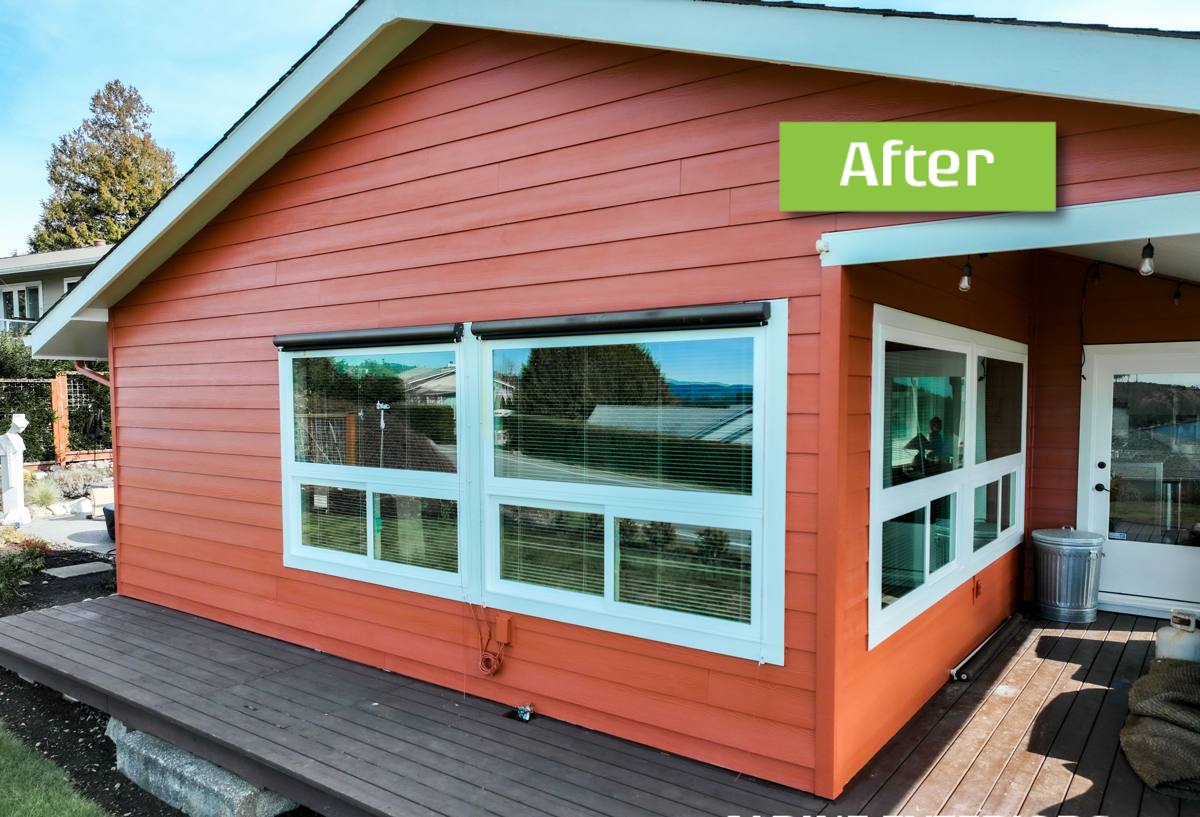
What Local Homes Actually Need From Their Siding
Siding in this neighborhood has to do three jobs at once, all year, without much of a break:
- Shed water fast and keep it from working behind the cladding at seams, corners, and penetrations
- Resist moss and mildew growth on shaded elevations without constant homeowner maintenance
- Hold its finish and shape through repeated wet-dry cycles instead of swelling, cupping, or letting paint fail
This is why we've standardized on James Hardie fiber cement and don't install vinyl, LP SmartSide, Cemplank, Allura, or primed wood species like spruce or cedar. Each of those products has legitimate uses somewhere, but none of them holds up the same way in a wet, moss-prone, marine-influenced climate like ours, and we'd rather tell you that up front than sell you something we don't fully stand behind.
Why We Don't Install the Alternatives
Vinyl siding can warp and gap over time as it expands and contracts, giving wind-driven rain a path behind the panel. Wood species like cedar and primed spruce look great on day one but need real upkeep — recoating, caulking, and moisture monitoring — to avoid rot in a climate this wet. LP SmartSide and other engineered-wood products perform reasonably when installation is flawless, but they're more sensitive to unsealed cut edges and moisture intrusion than fiber cement. Cemplank and Allura are fiber cement too, and are reasonable products, but we've chosen to build our installation expertise, warranty backing, and supply relationships around a single system rather than spreading across several — and James Hardie is the one we've decided to put our name behind.
James Hardie: The Product System We Install
James Hardie fiber cement is a blend of cement, sand, and cellulose fibers, factory-cured into planks and panels that don't feed mold, don't attract pests, and are non-combustible. For homes in this region, the relevant part isn't just the material — it's the engineering behind the specific product line.
Hardie makes climate-specific formulations under its HZ5 designation for regions with harsher freeze-thaw cycles, and standard HZ10 formulations for milder, wetter coastal climates like the Puget Sound region. Getting the right HZ line matched to King County's climate zone is part of a correct specification — it's not a detail homeowners should have to catch themselves.
Most of what we install carries Hardie's ColorPlus factory finish: a baked-on, multi-coat finish applied under controlled conditions rather than field-painted on site. Field-applied paint on fiber cement is a legitimate option, but ColorPlus consistently holds color and resists fading and moss staining longer, because the coating is cured in a factory environment instead of open air in variable weather.
What Correct Installation Actually Involves
Fiber cement siding is only as good as the installation behind it. The material itself resists moisture, but a job with poor flashing, tight-nailed fasteners, or missing gaps will still let water in and trap it — and trapped moisture behind siding is a slower, quieter problem than a visibly failing product, which makes it worse.
A correct installation on a Columbia City home includes:
- A water-resistive barrier installed continuously behind the siding, lapped correctly at every seam
- Properly flashed windows, doors, and any wall penetrations before a single piece of siding goes up
- Manufacturer-specified gaps at butt joints and terminations so the material can move without cracking or trapping water
- Fasteners set to Hardie's specified depth — not overdriven, which crushes the material's edge and voids warranty coverage
- Correct clearance from grade, roofing, and decks so siding isn't sitting in standing moisture or splash-back
- Caulking and sealant used only where Hardie's install guide calls for it, not as a substitute for proper flashing
Every one of those steps matters more in a climate that stays wet for months at a time than it would somewhere dry. Skipping any of them doesn't usually show up in the first year — it shows up three to five years later as staining, soft trim, or paint failure at the seams.
How Fiber Cement Compares for This Climate
| Siding Type | Moisture Behavior Here | Maintenance Burden | Long-Term Finish Stability |
|---|---|---|---|
| James Hardie Fiber Cement | Resists swelling and rot; factory finish resists moss staining | Low — periodic wash, no recoating on ColorPlus | High, especially with ColorPlus finish |
| Vinyl | Doesn't rot, but can warp and open gaps at seams over time | Low, but limited repair options once warped | Moderate — color and finish fade with UV exposure |
| Cedar / Primed Wood | Absorbs moisture readily; prone to rot without upkeep | High — recoating and caulk checks every few years | Low without consistent maintenance |
| Engineered Wood (LP SmartSide) | Vulnerable at unsealed cuts and edges if not detailed correctly | Moderate — edge sealing and monitoring needed | Moderate, installation-dependent |
What Drives the Cost of a Siding Project
Every home is different, but the same handful of factors move the price on most Columbia City siding jobs:
| Factor | Why It Matters |
|---|---|
| Tear-off vs. re-side | Removing old siding down to the sheathing costs more up front but lets us fix hidden moisture damage and install the water barrier correctly |
| Home size and wall complexity | More corners, dormers, and roof lines mean more cutting, flashing, and labor time |
| Siding profile chosen | Lap siding, shingle-style panels, and board-and-batten each have different material and labor costs |
| Trim and finish work | Matching existing trim details or upgrading trim adds to both material and labor |
| Underlying repairs found | Rotted sheathing or framing discovered during tear-off adds cost but has to be fixed before new siding goes on |
We don't quote a price without seeing the house. Anyone who does is guessing, and on an older home with mature landscaping and unknown wall conditions, guessing leads to change orders halfway through the job.
Signs Your Siding Needs Attention
Homeowners in this neighborhood often live with early warning signs longer than they should, mostly because siding problems develop slowly. Worth checking for:
- Persistent moss or dark staining on shaded or north-facing walls that comes back soon after cleaning
- Paint that's bubbling, peeling, or chalking, especially near seams and trim
- Soft spots when you press on siding near the bottom courses or around window trim
- Visible gaps, warping, or panels that have pulled away from the wall
- Rising energy bills with no other explanation, which can point to moisture-compromised insulation behind the siding
None of these mean you need a full replacement automatically, but they're worth a professional look before the next wet season adds to the damage.
Why Local Experience Matters on This Job
A crew that's worked in Columbia City and similar Seattle neighborhoods already knows the pattern: older framing, tree-shaded elevations, drainage that has to be routed around mature landscaping, and homeowners association or historic character considerations that come up in some of these blocks. That's the kind of context that shapes a flashing detail or a starter-course decision before it becomes a callback.
We also know what King County's moisture load does to a job that's rushed. A siding crew hopping between climate zones doesn't always adjust their habits — a gap spec that works in a dry region doesn't hold up here. We only work in this region, on this product, which means every job benefits from the last one.
Get a Straight Answer for Your Home
If your Columbia City home's siding is showing its age, or you're planning ahead before the next rainy season, we'll take a look and give you a straightforward, no-pressure estimate — what we'd recommend, why, and what it would cost. Use the form below to get started.