 Seattle
 Wallingford's Older Homes Meet a Demanding Marine Climate
Wallingford sits among the closer-in Seattle neighborhoods, and like much of that older housing stock, a good share of its homes were built well before anyone was thinking about drainage planes, house wrap, or engineered siding products. That's not a criticism of the neighborhood — it's just a fact that changes what a siding job needs to do. A century of Pacific Northwest weather has already tested every wall on every block, and the walls that are struggling usually show it in predictable ways: peeling paint, soft trim, dark streaking, or siding that's swollen and separating at the joints.
Seattle's marine climate is the reason. King County gets long stretches of low-intensity rain punctuated by wind-driven storms that push water sideways into wall assemblies, not just down. Add salt-laden air moving in off Puget Sound and the Sound-adjacent waterways, plus a moss season that can run from early fall through late spring in shaded, tree-covered residential streets, and you get a climate that's genuinely tough on exterior materials — even good ones, if they're installed wrong.
This page is specifically about fiber cement siding for Wallingford properties: what the climate demands, what a correct installation actually involves, and why we think a crew that already knows this neighborhood's housing stock does a better job than one seeing it for the first time.
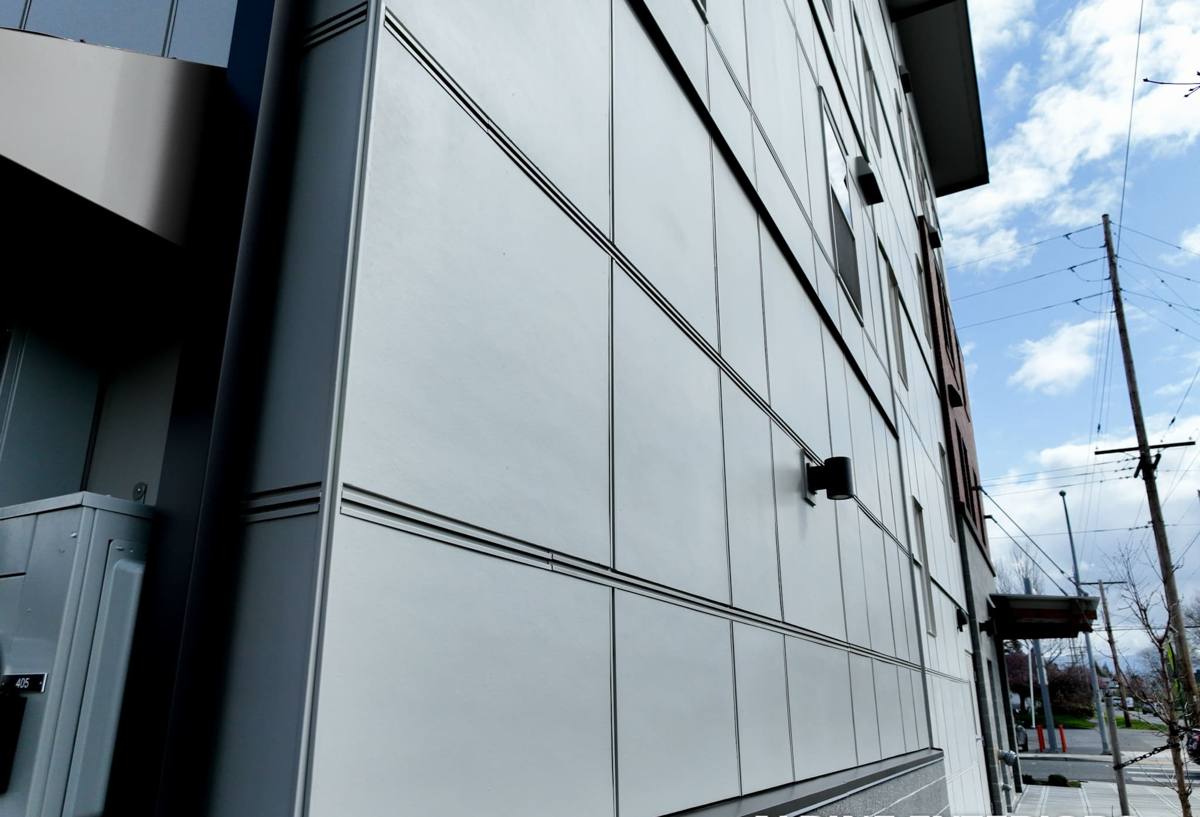
What Wallingford's Housing Stock Means for a Siding Job
Every neighborhood has its quirks, and the ones that matter most for siding work in an area like Wallingford are structural age and lot layout, not anything exotic:
- Older wall assemblies: Many homes were built without a modern water-resistive barrier or with materials that have since broken down, so tear-off often reveals sheathing that needs attention before new siding goes on.
- Narrower side setbacks: Closer-in lots mean less room to stage material and scaffolding on some elevations, which affects crew planning and neighbor coordination.
- Mature tree canopy: Established trees are part of what makes these streets desirable, but they also mean more shade, more debris on roofs and siding, and more moss and algae pressure on north-facing walls.
- Mixed renovation history: It's common to find additions, re-sided sections, or repairs from different decades on the same house, each with its own flashing details (or lack of them).
None of this is unique to any one street — it's the general condition of an older, established Seattle neighborhood. But it means a siding estimate here should include a real look at what's behind the existing cladding, not just a measurement of the walls.
Why We Install Fiber Cement — and Only James Hardie
We install James Hardie fiber cement siding exclusively. We don't install vinyl, LP SmartSide, other fiber cement brands, or wood siding, and that's a deliberate standard, not an oversight. Vinyl expands and contracts more than fiber cement in temperature swings and can crack or warp under impact; wood siding demands a maintenance schedule — painting, caulking, moisture checks — that most homeowners don't want to keep up with in a climate this wet; engineered wood products are more sensitive to sustained moisture exposure at cut edges and joints than fiber cement is.
Fiber cement is non-combustible, holds paint far longer than wood, doesn't attract insects, and handles the freeze-thaw and constant-damp cycle of a Puget Sound winter without warping. James Hardie's ColorPlus factory finish is baked on under controlled conditions rather than field-applied, which matters in a region where you often don't get long dry stretches to paint or caulk correctly. We standardized on Hardie specifically for the combination of its HZ5 product engineering for Pacific Northwest climate exposure, the depth of its color and texture lines, and a warranty structure that's meaningful because the company backing it has decades of track record in wet climates like ours.
What a Correct Fiber Cement Installation Actually Involves
Fiber cement siding is only as good as what's behind it and how it's fastened. The material itself is durable; installation mistakes are what cause the callbacks. A correct job includes:
The Water Management System
Siding is the visible layer, but the drainage plane behind it does the real work of keeping a wall dry. That means a continuous, properly lapped water-resistive barrier, correctly integrated window and door flashing (not just caulk), and a rain screen gap or drainage mat where the wall assembly calls for it so any water that gets behind the siding has somewhere to go.
Fastening and Clearances
James Hardie specifies fastener type, spacing, and penetration depth for each product line and exposure condition. Boards need proper clearance from grade, roof lines, decks, and other trim — gaps that are too tight trap moisture and undo the benefit of a moisture-resistant material.
Cut-Edge Sealing
Factory edges come pre-sealed, but every field cut exposes raw material that needs to be sealed before installation. Skipping this step is one of the most common shortcuts that shows up as premature edge deterioration years later.
Trim, Caulking, and Paint Lines
Corner boards, window trim, and butt joints all need the right sealant and the right gap treatment. This is finish-carpentry-level detail, and it's where a rushed crew's work usually looks different from a careful one within the first year or two.
Our Process for a Wallingford Project
| Step | What Happens | Why It Matters Here |
|---|---|---|
| Site walk and moisture check | Visual inspection plus moisture readings at vulnerable points — sills, corners, below windows | Older Wallingford walls often have hidden moisture history that needs to be addressed before re-siding, not after |
| Scope and product selection | Confirm HZ product line, panel or lap profile, and color for the home and elevation exposure | North-facing and shaded walls need different moss/algae planning than sun-exposed elevations |
| Tear-off and sheathing review | Remove existing siding, inspect sheathing, repair or replace damaged sections | This is the step that reveals real wall condition — it's not skippable on a house of this age |
| Water-resistive barrier and flashing | Install or repair house wrap, integrate window/door flashing correctly | This is what actually keeps wind-driven rain out, more than the siding itself |
| Fiber cement installation | Install to Hardie's fastening and clearance specs, seal all field cuts | Correct clearances prevent trapped moisture in a climate that rarely lets a wall fully dry out |
| Trim, caulk, cleanup | Finish carpentry, final caulking, site cleanup and debris haul-away | Tight lot lines mean cleanup and neighbor consideration matter more than on a wide-set property |
| Warranty registration | Register the installation with James Hardie | Keeps the manufacturer warranty active and tied to a documented, compliant install |
Moss, Algae, and Long-Term Maintenance
Moss doesn't damage fiber cement the way it damages wood, but it does hold moisture against the surface and can dull the factory finish over time if left unchecked, especially on shaded, north-facing walls common under mature tree canopy. The good news is that fiber cement's maintenance list is short compared to wood siding:
- Rinse siding annually (a garden hose is usually enough — avoid high-pressure washing directly at joints and trim)
- Keep gutters clear so overflow doesn't run down the wall face, which accelerates staining and moss growth
- Trim back vegetation that keeps a wall section shaded and damp longer than the rest of the house
- Re-caulk trim joints if you notice gaps opening up — this is a homeowner-level task, not a re-siding issue
- Watch for any soft spots or discoloration near ground level, which can indicate a drainage or grading issue unrelated to the siding itself
Compare that to a wood siding maintenance routine — periodic scraping, priming, and repainting, plus more vigilant moss control because wood absorbs and holds moisture that fiber cement sheds — and it's a meaningfully lighter long-term burden for a homeowner in a climate this wet.
What Drives Cost on a Job Like This
| Factor | Why It Affects Price |
|---|---|
| Sheathing condition found at tear-off | Rot or water damage discovered behind old siding requires repair before new siding can go on |
| Home age and wall complexity | Older homes often have more trim detail, dormers, and transitions that take more labor per square foot |
| Product line and profile | Hardie's lap, shingle, and panel lines carry different material costs and installation labor |
| Access and lot constraints | Narrower side yards and closer-set neighboring homes can slow staging and require more careful protection of adjacent property |
| Existing moisture damage | Any sheathing or framing repair needed before installation adds scope beyond straightforward re-siding |
| Color and finish selection | ColorPlus factory-finished options versus field-painted options affect both cost and long-term touch-up needs |
We give a firm number after we've actually looked at the wall condition, not before — a phone estimate on a home this age is a guess, and we'd rather give you an accurate one.
Why a Crew That Already Works in Wallingford Matters
Siding contractors who work across King County regularly encounter the same categories of older Seattle housing stock, and that repetition matters. A crew that's already re-sided homes with similar-era construction knows what to expect when the old siding comes off, has a realistic sense of how long a tear-off and moisture-remediation job actually takes on a house like this, and isn't discovering wall assembly quirks for the first time on your project. That translates into more accurate estimates up front and fewer surprises mid-project.
Local familiarity also matters for the practical, unglamorous parts of the job: knowing how to stage material and dumpster placement on a tighter lot, being realistic about weather windows during Seattle's wetter months, and communicating clearly with neighbors when work is happening close to a shared property line. None of that shows up in a brochure, but it's the difference between a smooth project and a frustrating one.
Questions to Ask Before You Hire
Whether you go with us or anyone else, these are worth asking any siding contractor bidding a fiber cement job in this area:
- Will you inspect the sheathing before quoting a final price, or is the bid based only on exterior measurements?
- Are your installers factory-trained on the specific Hardie product line being used?
- What's your plan for the water-resistive barrier and flashing detail — not just the visible siding?
- Will the installation be registered with James Hardie for warranty coverage?
- How do you handle unexpected moisture damage found once old siding comes off?
- Can you walk me through your fastening and clearance approach for this specific wall assembly?
If you're weighing a fiber cement siding project for a Wallingford home, we're glad to come take a real look at your walls, explain what we find, and put together a straightforward, no-pressure estimate — no obligation either way. The form below is the easiest way to get that started.