 Seattle
 Custom Windows in Green Lake: Built for Seattle's Marine Climate
Green Lake is one of Seattle's most walkable, well-established neighborhoods, and its housing stock reflects that. You'll find older craftsman and bungalow-style homes from the early-to-mid 1900s standing next to newer infill construction, and both types of homes tend to run into the same problem when it's time to replace windows: standard off-the-shelf sizes don't always fit what's actually in the wall. Openings settle, older framing was often built to dimensions that predate modern manufacturing standards, and architectural details like grille patterns, arched tops, or bay configurations don't come in a stock size. That's where custom windows come in — built to the exact opening and style of the home, rather than forcing the home to accommodate whatever size happens to be on the shelf.
Seattle Exterior installs custom windows for homes throughout Green Lake and the rest of King County, and we also handle siding, roofing, and decks — because a window is never really an isolated product. It's one component of the wall assembly, and it has to work with the siding, flashing, and framing around it or it becomes the weak point in an otherwise solid house. In a neighborhood like Green Lake, sitting within Seattle's marine-influenced weather system, that means every custom window has to be built and installed to handle salt-tinged air moving in off Puget Sound, driving rain, and a moss season that runs longer here than in drier parts of the country.
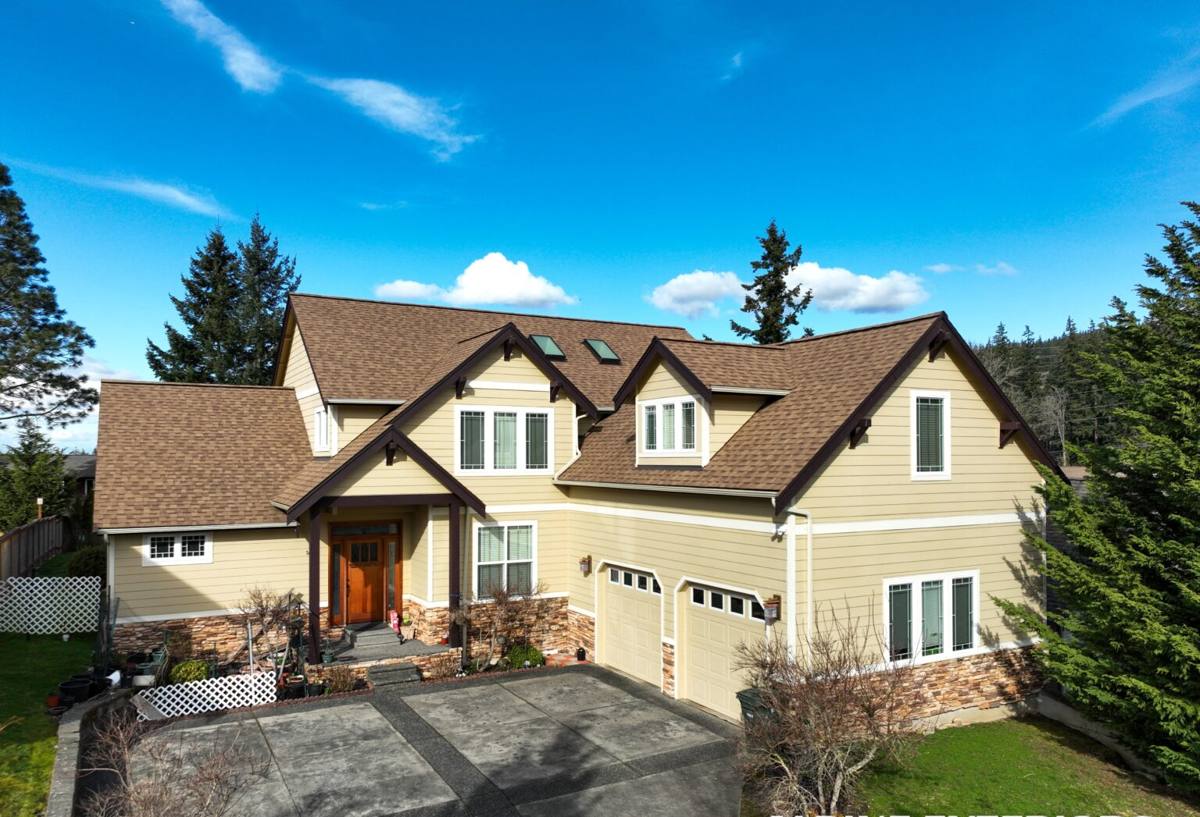
What This Climate Does to Windows Over Time
Salt-Tinged Air and Hardware Corrosion
Seattle sits close enough to Puget Sound that marine air carries a steady, low-grade salt content across most of the city, Green Lake included. It's not the direct salt spray you'd get on a waterfront property, but it's a persistent, cumulative load on window hardware, screen frames, and lower-grade fasteners over the years. Cheaper finishes tend to show pitting, stiffness in the locking hardware, or corrosion streaking on the frame first — usually a sign the original hardware wasn't specified for this region's air.
Driving Rain and Flashing Failures
Rain here rarely falls straight down. Wind pushes it sideways into window flashing, head trim, and the sill pan beneath the frame, and that sideways load is a much tougher test of the installation than of the window product itself. A quality window installed with sloppy flashing will leak eventually; a modest window installed with a correctly pitched sill pan and properly lapped flashing usually won't. In our experience, the large majority of water damage found around windows traces back to an installation detail — not a failure of the window itself.
Moss, Mildew, and a Long Wet Season
King County's extended damp season gives moss and mildew a lot of time to work on any surface that stays shaded or doesn't drain well. On windows, that shows up as mildew staining on sills and lower sashes, and on wood-framed windows, slow rot at the corners and sill where water sits the longest. It's gradual — most homeowners don't notice until paint starts failing or the sill feels soft underfoot.
What "Custom" Actually Means for a Green Lake Home
"Custom" doesn't just mean expensive or decorative — it means the window is built to match something specific about your house rather than the nearest standard size. That comes up constantly in this neighborhood because of how many homes are older and how varied the architecture is. Common reasons a Green Lake homeowner ends up needing custom rather than stock windows:
- Original openings that are non-standard sizes, common in homes built before modern manufacturing standardized dimensions
- Architectural details worth preserving — divided-light grille patterns, arched tops, or bay and bow configurations
- Matching a row of existing windows on the same wall so the new one doesn't stand out
- Framing that has shifted or settled slightly over the decades, making a true stock fit unreliable
- A desire to change a window's shape or size as part of a broader remodel, rather than a straight swap
We measure the actual opening, not a catalog number, and order or build to that. On homes where matching the existing architectural character matters, we'll talk through grille patterns, exterior color, and trim profile before anything is ordered — it's much easier to get that right up front than to notice a mismatch after installation.
Window Materials: What Actually Holds Up in This Climate
There's no single correct material for every home — budget, sun exposure, and how long you plan to stay in the house all factor into the decision. What matters is understanding the real trade-offs for a climate with this much sustained moisture before you commit.
| Frame Material | Moisture & Corrosion Behavior | Typical Maintenance | Realistic Lifespan Here |
|---|---|---|---|
| Vinyl | Won't rot; seam and weld quality determines long-term water resistance | Low; occasional track and weep-hole cleaning | 20-30 years |
| Fiberglass | Dimensionally stable, holds up well against corrosion and moisture | Low | 30-40+ years |
| Wood, painted or clad | Best for matching older architectural detail, but vulnerable at joints and sills without upkeep | Higher; periodic paint or finish maintenance | 15-30 years depending on upkeep |
| Aluminum | Conducts cold and can corrode over time in salt-influenced air unless well-finished | Moderate | 20-30 years |
For custom window work in Green Lake, wood-clad and fiberglass tend to come up most often — wood-clad because it matches the look of older craftsman details on the exterior while giving a low-maintenance finish, and fiberglass because it holds paint and color well over the long term without the upkeep wood demands. We'll walk through which one actually fits your home's exposure and the look you're after, rather than defaulting to whatever is easiest to sell.
Full-Frame Replacement vs. Insert Replacement
One of the first decisions on any window project, custom or not, is whether to do a full-frame replacement — removing the old window down to the rough opening and rebuilding the flashing from scratch — or an insert replacement, which fits a new window into the existing frame. Insert replacement is faster and less invasive to the surrounding siding and trim, and it works well when the existing frame is structurally sound and was properly flashed to begin with. Full-frame replacement costs more and takes longer, but it's the honest answer when there's already moisture damage at the sill or jambs, when you're changing the window's size or shape, or when the original flashing was never done correctly in the first place. We'll tell you which situation your home is actually in rather than defaulting to the cheaper option and sealing a moisture problem up behind a new window.
Our Process for a Custom Window Job
- On-site assessment: We measure every opening by hand, check the condition of the existing framing and flashing, and note any architectural details worth matching.
- Design and ordering: Frame material, grille pattern, color, and glass package are finalized before anything is ordered, since custom units take longer to build than stock sizes.
- Careful removal: Old windows come out without unnecessary damage to surrounding siding or trim, and we inspect the opening for hidden rot or moisture damage once it's exposed.
- Flashing and sill pan work: This is where most long-term water problems get prevented or created, so it's never rushed or treated as a formality.
- Installation and sealing: The new window is set, shimmed level and plumb, and sealed with the right materials for a home in a wet marine climate.
- Interior and exterior finish: Trim is reinstalled or replaced to match, and the site is left clean.
Installation Fundamentals We Don't Treat as Optional
Most window failures in this climate aren't failures of the window itself — they're shortcuts in the flashing and sealing details that don't show up until a wet season or two later. On every custom window job, that means:
- A properly pitched sill pan that sheds water outward instead of letting it pool under the frame
- Head flashing integrated with the housewrap or building paper above the window, lapped correctly for water to shed downward and outward
- Jamb flashing tied into the surrounding wall assembly rather than relying on caulk alone
- Weep holes and drainage paths left clear and functional, not sealed shut during installation
- Corrosion-resistant fasteners and hardware appropriate for a consistently damp, salt-influenced climate
- Insulation and air sealing around the frame that doesn't trap moisture against the framing
Why a Crew That Already Works Green Lake Matters
Custom window work rewards local experience in ways a lot of other exterior projects don't. A crew that's worked on Green Lake homes before has a feel for the range of opening sizes and architectural styles common to the neighborhood, knows what to expect when an older wall gets opened up, and has already worked through the City of Seattle's permitting process for window changes — which can vary depending on the home's age, whether the work changes an opening's size, and whether the property falls under any additional design review. A contractor who's only seen a handful of Green Lake homes is learning those specifics on your job. A contractor who works the neighborhood regularly already knows them, which usually means fewer surprises and a smoother permit process from the start.
Get an Honest Look at Your Windows
If you're weighing whether your Green Lake home needs a few custom windows replaced or a full-house project, we're happy to take a look and give you a straightforward assessment — no pressure, no inflated urgency. Use the form below to request a free estimate, and we'll walk the property, measure what actually needs measuring, and tell you honestly what we'd recommend.