 Seattle
 Queen Anne's Siding Has a Tougher Job Than Most Seattle Neighborhoods
Queen Anne sits on one of the highest points in Seattle, and that elevation is a mixed blessing for the homes up here. The views are real, but so is the exposure. Homes on the upper slopes and along the west- and south-facing sides of the hill catch wind and driving rain with less to break it up than homes tucked into flatter, more sheltered parts of the city. Add in the salt-tinged air moving in off Puget Sound and Elliott Bay, and you've got a combination that puts real, sustained pressure on exterior siding — pressure that shows up as premature fading, moisture intrusion, and a moss problem that barely lets up for most of the year.
We install James Hardie fiber cement siding exclusively. We don't install vinyl, LP SmartSide, cedar, or other engineered wood products, and Queen Anne is one of the neighborhoods where that decision matters most. This page is specifically about what a correctly installed Hardie system needs to do on a Queen Anne home, what the installation process actually involves, and why the crew doing the work matters as much as the product itself.
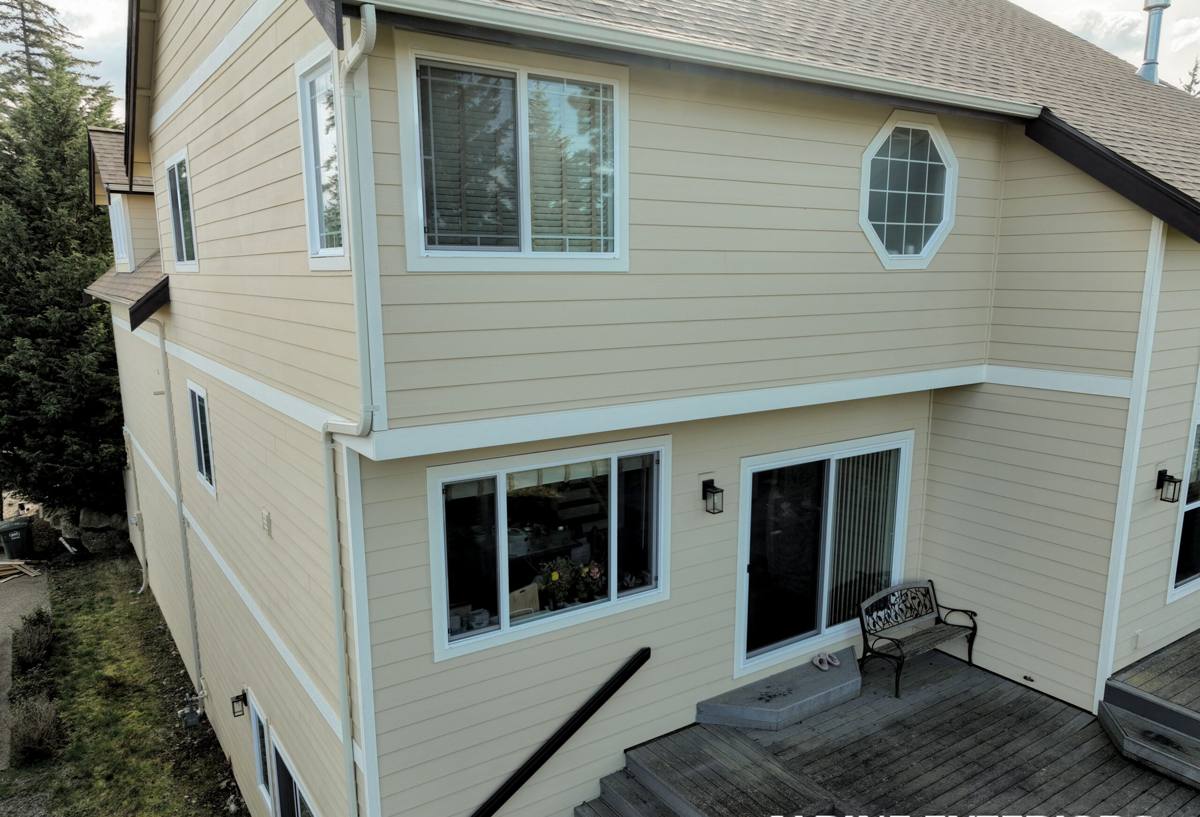
What Queen Anne's Climate Actually Does to Siding
Salt Air and Elevation
Queen Anne's hillside position means many homes get a steadier draw of marine air than properties further inland. Salt-laden moisture in the air accelerates the breakdown of paint finishes, corrodes exposed fasteners, and speeds up wear on any siding material that isn't engineered to resist it. Over years, that steady low-grade exposure adds up faster than homeowners expect, especially on walls that face the water or sit higher on the slope with less windbreak from surrounding structures or trees.
Driving Rain on Exposed Slopes
Seattle's storms frequently arrive with wind behind them, and on a hill like Queen Anne, that wind doesn't lose much force before it hits a wall. Rain that would fall mostly straight down in a sheltered valley neighborhood often comes in at an angle here, which means it's testing every seam, joint, and piece of trim on a home's exterior far harder than a calm-weather install would suggest. Siding that relies on loose overlapping panels and a passive drainage plane is more exposed to this kind of wind-driven rain than a dense, properly flashed fiber cement system.
The Long Moss Season
King County doesn't get much of a real dry-out window, and Queen Anne's mix of mature trees, close-set lots, and shaded north-facing walls gives moss and algae exactly the damp, low-light conditions they need. Moss growth isn't just cosmetic — it holds moisture against the siding surface longer than an exposed, sun-drying wall would, which matters over the life of a finish and around any seams or fastener points that aren't sealed correctly.
Older Housing Stock, Mixed Wall Conditions
Queen Anne has a lot of older homes, many remodeled or added onto over the decades. That's common in this part of Seattle, but it means the sheathing and water-resistive barrier behind existing siding can vary a lot from one wall to the next, even on the same house. A proper siding job here starts with actually looking at what's underneath, not assuming it matches what's on the plans or what the neighboring wall looks like.
Why We Only Install James Hardie on Queen Anne Homes
Given all of that — the exposure, the salt air, the moss, the mixed condition of older wall assemblies — we made a standing decision to install one product and know it thoroughly rather than offer several and spread that expertise thin. James Hardie's fiber cement is made from cement, sand, and cellulose fibers, pressed and cured into a dense, dimensionally stable board. It doesn't expand and contract the way vinyl does in temperature swings, it doesn't rot the way untreated wood can, and it holds its factory finish far more consistently over the kind of sustained damp exposure Queen Anne sees.
The HZ5 Climate Engineering
Hardie engineers different product formulations for different climate zones, and the HZ5 line is built specifically for regions with cold, wet, moisture-cycling conditions — which describes the Pacific Northwest almost exactly. That engineering shows up in how the board resists moisture-related swelling and how it performs over repeated wet-dry cycles across a Seattle winter.
ColorPlus Factory Finish
Most of the Hardie siding we install carries the ColorPlus finish, a factory-baked coating applied under controlled conditions no jobsite can replicate. On a hill exposed to salt air and driving rain, that matters — a factory finish resists fading and chipping better than field-applied paint, and it comes with its own separate finish warranty on top of the substrate warranty for the board itself.
Non-Combustible Material
Fiber cement doesn't burn. That's a meaningful difference from some alternative siding materials, and it's become a more relevant consideration as Western Washington's late-summer wildfire smoke seasons have grown more noticeable in recent years.
What a Correct Installation Looks Like on a Hillside Home
The material is only half the equation. A Hardie board installed without proper flashing, clearance, and fastening will still let water in on an exposed Queen Anne wall, no matter how good the product is. Here's what we hold every job to:
- Correct water-resistive barrier and drainage plane behind the siding, lapped and sealed to shed water down and out, not into the wall assembly
- Manufacturer-specified clearance from grade, roof lines, decks, and other penetrations so water has somewhere to go besides behind the board
- Properly sealed and flashed butt joints, corners, and every window and door penetration — the points where the vast majority of real-world siding failures start
- Fasteners placed per Hardie's published fastening schedule, sized and spaced to hold on exposed, wind-loaded walls
- Careful attention to any transition where new siding meets existing trim, masonry, or an addition from a different construction era
Our Process for a Queen Anne Siding Project
1. On-Site Assessment
We start by walking the exterior with you, looking at wall exposure, existing siding condition, and any signs of moisture intrusion around windows, trim, or foundation lines. On older Queen Anne homes, this step often reveals conditions behind the existing siding that weren't visible from the street.
2. Tear-Off and Substrate Check
Once the old siding comes off, we inspect the sheathing and framing underneath before anything new goes up. If there's rot or water damage from a prior installation, that gets addressed first — covering a compromised substrate with new siding just hides the problem for a few more years.
3. Water-Resistive Barrier and Flashing
This is the layer that actually keeps a home dry, more than the siding material itself. We install and lap the barrier correctly, then flash every window, door, and penetration before the first piece of Hardie goes up.
4. Hardie Installation to Spec
Boards are installed following Hardie's fastening schedule and clearance requirements, with special attention to the wall orientations catching the most wind-driven rain — typically the west- and south-facing exposures common on Queen Anne's hillside lots.
5. Final Walkthrough
We walk the finished job with you, checking seams, trim, and caulking lines, and go over what routine maintenance looks like going forward.
Cost Factors on a Queen Anne Project
| Factor | Why It Affects Cost |
|---|---|
| Home size and wall complexity | More corners, dormers, and roof lines mean more flashing detail and labor time |
| Existing siding condition | Rotted sheathing found during tear-off adds repair scope before new siding can go on |
| Access and site conditions | Steep lots, retaining walls, and tight setbacks common on the hill can affect staging and labor time |
| Hardie product line chosen | Lap siding, panel siding, and shingle-style profiles carry different material costs |
| Finish option | Factory ColorPlus finish versus field-applied paint affects both cost and long-term maintenance |
| Trim and detail work | Older homes with existing trim details often need custom work to match or transition cleanly |
Why Hiring a Crew That Already Works Queen Anne Matters
Siding installation isn't uniform across Seattle, and a crew that mostly works flatter, more sheltered neighborhoods doesn't automatically translate that experience to a wind-exposed hillside lot. Knowing which wall orientations on Queen Anne take the worst of the driving rain, how older homes in this neighborhood tend to be framed and sheathed, and where access and staging get tricky on steep or narrow lots all comes from doing the work here repeatedly, not from a general siding background alone. A crew with that local familiarity plans the job more accurately from the start, which shows up in fewer surprises once tear-off begins.
Signs Your Queen Anne Home May Need Siding Attention
- Soft or spongy spots when you press on the siding, especially near the bottom courses or around window trim
- Visible moss or algae buildup that returns quickly after cleaning
- Paint or finish that's peeling, bubbling, or chalking, particularly on west- and south-facing walls
- Warped, buckled, or separated panels, especially after a windy winter storm season
- Water stains or discoloration on interior walls near exterior corners
- Visible gaps or cracking at seams, corners, or trim transitions
Questions Worth Asking Before You Hire
Any contractor proposing siding work on a Queen Anne home should be able to answer these clearly:
- Are they licensed and bonded to work in Washington, and can they show manufacturer certification for the specific product they're installing?
- How will they handle flashing and sealing at every window, door, and penetration — not just the general siding installation?
- What's their plan if they find rot or moisture damage once the old siding comes off?
- Is the finish factory-applied or field-applied, and what does each warranty actually cover?
- Do they have experience specifically with hillside or wind-exposed lots, not just siding in general?
Why We Stand Behind Hardie on Every Job We Take
We made the call years ago to specialize in James Hardie fiber cement and nothing else, because it matches what homes on a hill like Queen Anne actually need to hold up against — sustained wind-driven rain, salt air, and a moss season that doesn't give walls much of a break. It costs more upfront than some alternatives, and we say that plainly rather than downplay it. But between the HZ5 climate engineering, the factory ColorPlus finish, and a transferable warranty structure, it's the system we're willing to put our name behind on a neighborhood with this much exposure.
If you're weighing a siding project for your Queen Anne home, we're happy to walk the exterior with you, point out the specific conditions your walls are facing, and put together a straightforward, no-pressure estimate for a correctly installed Hardie system.