 Seattle
 Metal Roofing in Kirkland: Built for What This Climate Actually Does
Kirkland sits on the eastside of Lake Washington, and that location cuts both ways for a roof. Homes get some shelter from the harsher weather that hits the outer Sound, but they also sit close enough to open water to pick up damp, salt-tinged air, plus the shade and moisture that come with maturing tree canopy on a lot of Kirkland streets. Add in a wet season that can stretch from fall through spring, and you have a set of conditions that will find every weak point in a roofing system over time. Metal roofing, installed correctly, handles that combination better than most alternatives — but "installed correctly" is doing a lot of work in that sentence, and it's where a lot of jobs in this region fall short.
This page is specifically about metal roofing for Kirkland homes, not a general overview of metal roofing everywhere. The install details, ventilation choices, and maintenance schedule below are shaped by King County's climate and by what we actually see on roofs in this part of the Seattle area.
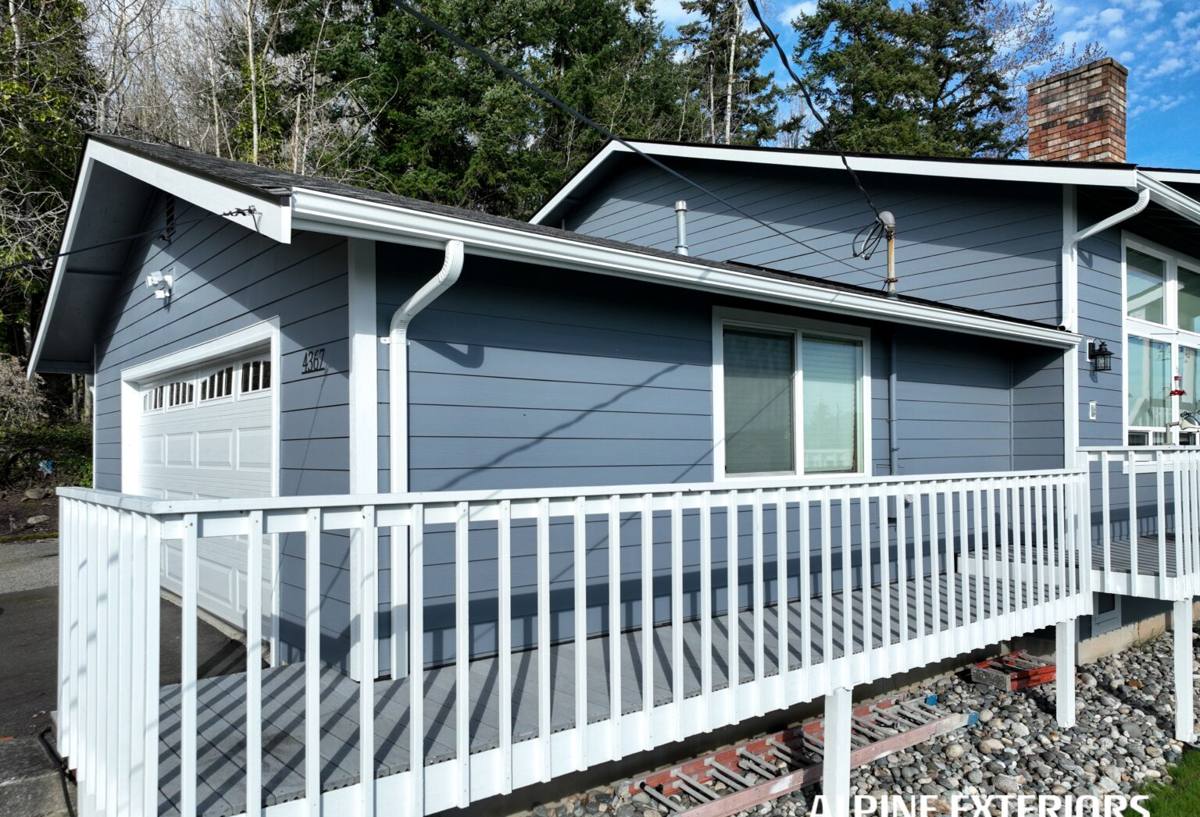
What Driving Rain, Salt Air, and Moss Season Do to a Roof
Three things drive most of the roof problems we get called out for in Kirkland and the surrounding eastside communities:
Driving Rain
Wind-driven rain doesn't just fall straight down — it pushes sideways under laps, around fasteners, and into any gap in flashing. On a roof with marginal underlayment or loose seams, that means slow water intrusion that can go unnoticed in an attic for a long time before it shows up as a stain on a ceiling.
Salt-Tinged Air
Homes closer to Lake Washington and the broader Puget Sound air mass deal with a low level of airborne moisture and salinity that accelerates corrosion on unprotected metal — exposed fasteners, cheap flashing, and lower-grade coatings age faster here than they would inland.
Moss Season
Shaded, north-facing slopes and roofs under tree cover stay damp for extended stretches, which is exactly what moss and algae need to take hold. On shingles, moss lifts tabs and holds moisture against the roof deck. Metal doesn't give moss the same texture to grip, but debris and organic buildup in valleys and around penetrations can still trap moisture against seams and fasteners if a roof isn't detailed well or cleaned periodically.
None of this means metal roofing is a guaranteed fix. It means the material has real advantages in this climate, but only when the panel choice, fastening method, and flashing details are matched to what Kirkland weather actually does over years, not just what looks good on installation day.
Panel Types: What We Recommend and Why
Not all metal roofing is the same product wearing a different color. The two broad categories homeowners run into are standing seam and exposed-fastener (sometimes called corrugated or ag-panel) systems. Both are legitimate roofing materials — the right choice depends on the roof's slope, budget, and how much long-term maintenance the homeowner wants to take on.
| Factor | Standing Seam | Exposed-Fastener Panel |
|---|---|---|
| Fasteners | Hidden, clipped beneath panel seams | Visible screws through the panel face |
| Long-term maintenance | Minimal — no fastener washers to inspect | Fastener washers age and need periodic checking/replacement |
| Water performance in driving rain | Very strong; seams interlock rather than relying on a gasket | Good, but depends on gasket condition at every screw |
| Upfront cost | Higher | More budget-friendly |
| Best fit | Low-slope areas, homes near the water, long-term owners | Steeper roofs, outbuildings, budget-driven projects |
For most primary homes in Kirkland — especially anything with a lower-pitch section, a roof near tree cover, or proximity to the lake — we lean toward standing seam because the hidden-fastener design removes the single most common long-term failure point on a metal roof: aging screw gaskets. For steeper secondary roofs, shops, or budget-conscious projects, a quality exposed-fastener system installed with the right screw spacing and washer type is still a sound choice. We'll walk through both options honestly rather than push the higher-cost system by default.
What a Correct Metal Roof Installation Actually Involves
The panels themselves get most of the attention, but the layers underneath and the details at every edge and penetration are what determine whether a metal roof performs for decades or starts leaking in year five. A correct install in this climate includes:
- A high-temperature synthetic or self-adhered underlayment rated for the panel type and slope, not a generic felt product
- Proper fastener spacing and, for exposed-fastener systems, screws with intact rubber washers matched to the panel material to avoid galvanic reaction
- Ice-and-water shield or equivalent membrane at eaves, valleys, and any low-slope transition, since these are where driving rain concentrates
- Metal flashing — not caulk alone — at every roof-to-wall transition, chimney, skylight, and vent penetration
- Balanced intake and exhaust ventilation so moist interior air isn't trapped against the underside of the deck, which matters as much for condensation control as roof longevity
- Panel and fastener materials matched to each other to prevent galvanic corrosion between dissimilar metals
Skipping any one of these doesn't necessarily cause a problem right away. It shows up two, five, or ten winters later, usually during the kind of sustained wet stretch that's routine in King County. That's why we treat these details as non-negotiable rather than upgrades.
Our Process for a Kirkland Metal Roofing Project
1. On-Site Assessment
We walk the roof and the attic, not just the roof. Slope, existing deck condition, current ventilation, and any moisture or moss patterns tell us what the roof actually needs, not just what panel color the homeowner likes.
2. Written Scope and Panel Recommendation
We lay out panel type, underlayment, flashing plan, and ventilation changes in writing before any work starts, with the reasoning behind each choice — no vague "roofing package" line items.
3. Tear-Off and Deck Inspection
Once the old roofing is off, we inspect the deck for rot or soft spots, common on older Kirkland homes where a roof has been holding moisture for years. Any deck repairs are addressed before a single panel goes down.
4. Underlayment, Flashing, and Panel Installation
Installed in the sequence and with the fastening method appropriate to the specific panel and slope, with flashing details built for wind-driven rain rather than a straight-down-rain assumption.
5. Final Walkthrough
We review the finished roof with the homeowner, including what routine maintenance to expect and what a healthy roof should look like a year from now.
Maintenance: What a Metal Roof Needs Through Moss Season
One real advantage of metal roofing in this climate is how little ongoing maintenance it needs compared to shingles — but "little" isn't "none." A simple seasonal routine keeps a metal roof performing the way it's supposed to:
- Clear valleys, gutters, and any low-slope sections of leaf litter and debris before the wettest months, since trapped organic material holds moisture against seams
- Do a visual check of flashing at chimneys, vents, and wall transitions annually for gaps or lifted edges
- On exposed-fastener systems, check screw washers every few years and replace any that show cracking or wear
- Avoid pressure washing directly into seams or under panel edges — a soft brush and low-pressure rinse is enough to manage moss and algae growth
- Keep overhanging branches trimmed back where practical to reduce shade and debris load on north-facing slopes
None of this requires a specialist visit every year, but a periodic check catches small issues — a lifted flashing edge, a clogged valley — before a wet Kirkland winter turns them into a bigger repair.
What Drives the Cost of a Metal Roof
Metal roofing costs more upfront than asphalt shingles, and the final number depends on several factors specific to the project rather than a flat per-square rate. Broadly, homeowners should expect metal roofing to run from a moderate premium over shingles up to significantly more, depending on the choices below.
| Factor | Effect on Cost |
|---|---|
| Panel type (standing seam vs. exposed-fastener) | Standing seam typically costs more due to material and labor for hidden-fastener installation |
| Roof complexity (valleys, dormers, penetrations) | More flashing detail work means more labor time |
| Deck condition | Rot or soft decking found at tear-off adds repair cost before installation can proceed |
| Ventilation upgrades | Adding or correcting intake/exhaust ventilation is a smaller add-on but affects long-term performance |
| Panel gauge and coating | Heavier gauge and higher-grade coatings cost more but hold up better against salt-tinged air over time |
We provide a written, itemized estimate so homeowners can see exactly what's driving the number rather than a single lump sum.
Why Hiring a Crew That Already Works in Kirkland Matters
Metal roofing is a specialized trade — the fastening methods, flashing sequence, and panel handling are different from asphalt shingle work, and mistakes are less forgiving because a poorly cut panel or a missed flashing detail is harder to patch invisibly later. Beyond the trade skill itself, there's real value in working with a crew that already knows this specific area: the roof pitches and construction common on Kirkland and eastside homes, how moss and shade patterns behave on lots near Lake Washington, and what driving rain does to flashing details on this side of King County. That local pattern recognition is part of what keeps a job from turning into a callback.
If you're weighing a metal roof for a Kirkland home — new construction, a full replacement, or repair to an existing metal roof — we're happy to walk the roof, answer questions honestly, and put together a free, no-pressure estimate using the form below.