 Seattle
 Windows Are a Structural Decision, Not a Finishing Touch
On a new build or a major addition in Bellevue, windows get specified early and installed mid-framing — long before anyone is thinking about paint colors or hardware finishes. That timing matters. A window opening is one of the largest planned penetrations in a wall assembly, and how it's flashed and integrated with the weather-resistive barrier determines whether that wall stays dry for the next 30 years or starts hiding a rot problem behind the drywall in year eight. In new construction, you get exactly one chance to do this correctly before the siding goes on and the opening is sealed up for good.
We work new-construction window installs across the Eastside and greater King County, which means we're used to coordinating with framers, GCs, and inspectors on a build schedule rather than showing up to a finished house. That's a different job than swapping out an old window, and it calls for a different level of attention to sequencing.
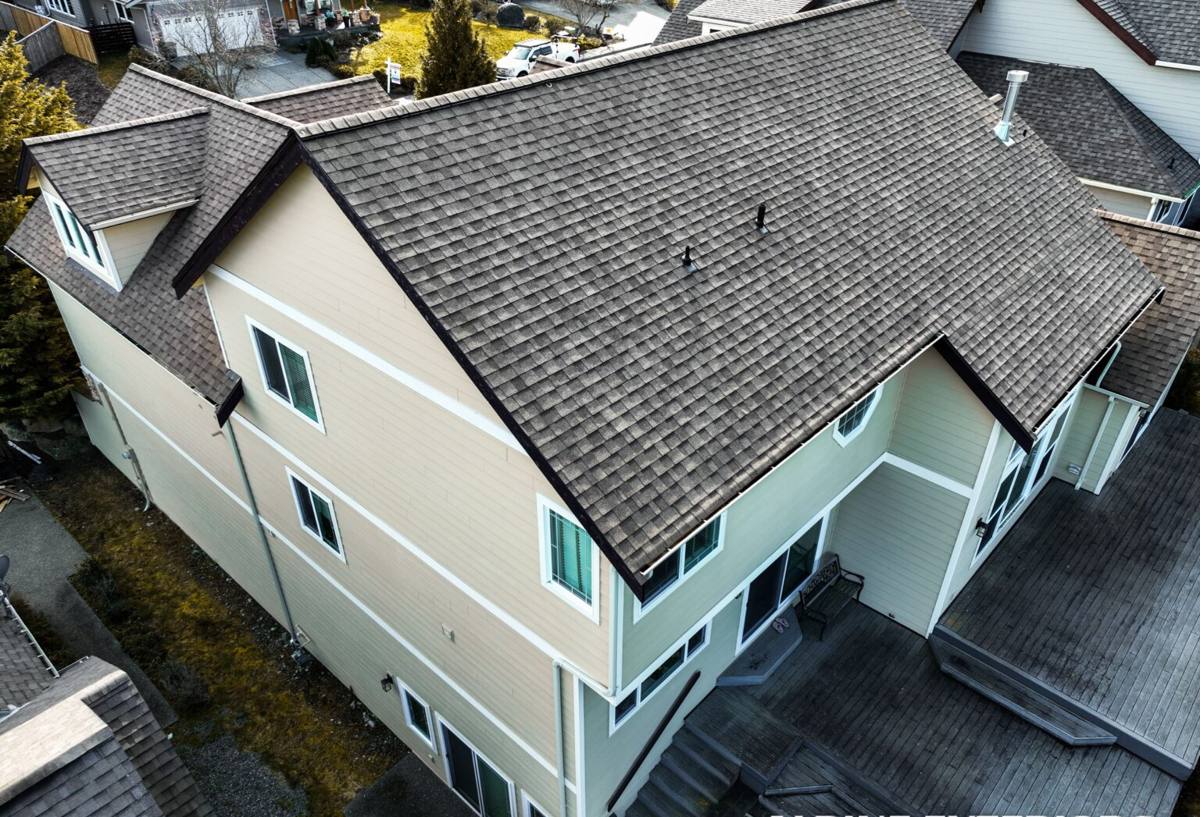
What Bellevue's Climate Asks of a New Window Installation
Bellevue sits in the Puget Sound marine climate, and while it's not directly on saltwater the way some Sound-front communities are, the region as a whole deals with the same core stresses: salt-laden air moving in off the water, driving rain pushed sideways by wind, and long stretches of gray, damp weather that keep exterior surfaces wet for days at a time. A window that's flashed correctly shrugs this off. One that isn't will fail quietly, from the inside of the wall, long before you see a stain on the trim.
Driving Rain and Wind-Driven Water
Wind-driven rain doesn't just hit a window head-on — it gets pushed up and sideways, testing every seam, nailing fin, and sill pan on the unit. New-construction windows rely on a layered flashing system (not caulk alone) to manage this, because caulk is a maintenance item, not a waterproofing strategy.
The Long Moss and Damp Season
King County's extended wet season means exterior wood trim, sills, and even vinyl cladding stay damp for long periods, which is exactly the environment moss and mildew need to take hold. On a new build, this is solved less by the window itself and more by getting the drainage plane behind and below it right, so water is directed out and away instead of pooling against the frame.
New-Construction vs. Replacement Installation: Why the Method Matters
These are genuinely different jobs, not the same window installed two different ways. New-construction units have a nailing fin that gets integrated directly into the wall's weather-resistive barrier and flashing system before siding goes on. Replacement (pocket or insert) units are designed to fit into an existing, already-finished opening. Using the wrong approach for the situation — or a crew that only knows one of the two — is one of the more common ways new-build windows end up with hidden moisture problems.
| Factor | New-Construction (Nail-Fin) | Replacement (Insert/Pocket) |
|---|---|---|
| When it's used | New builds, additions, full wall re-sheathing | Existing finished walls, siding already in place |
| Water management | Fin integrates directly with WRB and flashing tape | Relies on the existing opening's flashing being sound |
| Sequencing | Installed before siding/trim, coordinated with framer | Standalone job, no framing coordination needed |
| Opening size flexibility | Framed to the exact window dimension | Limited by the existing rough opening |
| Long-term risk if done wrong | Concealed wall rot behind new siding | Water intrusion at existing frame interface |
What a Correct New-Construction Installation Actually Involves
The window unit itself is often the easy part. The work that actually determines whether the installation holds up is in the sequence around it — how the opening is prepped, how the flashing layers overlap, and how the sill is pitched to drain.
The Flashing Sequence, In Order
Every layer has to overlap the one below it like shingles on a roof, so water is always directed outward and down, never trapped behind a layer above it. Skipping a step or doing them out of order is one of the most common causes of hidden leaks in otherwise good-looking new construction.
- Rough opening is checked for square, level, and correct dimension before the window ever arrives on site
- A sloped sill pan is installed so any water that gets past the window has somewhere to go besides the framing
- Weather-resistive barrier is cut and integrated with the sill pan before the window goes in
- Window is set, shimmed level and plumb, and fastened through the nailing fin per the manufacturer's schedule
- Jamb and head flashing tape is applied over the fin, lapped correctly with the WRB above and beside it
- Head flashing (drip cap) is installed above the window before siding closes in around it
- Interior gaps are sealed with low-expansion foam or backer rod, not solid foam that can bow the frame
- Exterior trim and siding are installed last, without covering or compressing the flashing layers underneath
Frame Material and Glass: What Actually Fits a Bellevue Build
There's no single "right" frame material for new construction — it's a real trade-off between upfront cost, long-term maintenance, and how the material handles this region's damp climate. Here's how the common options actually compare, without the marketing spin.
| Material | Moisture Behavior | Maintenance | Relative Cost |
|---|---|---|---|
| Vinyl | Won't rot; performs well in damp climates | Low — occasional cleaning | Lower |
| Fiberglass | Very stable, minimal expansion/contraction, excellent moisture resistance | Low | Mid to higher |
| Wood-clad | Good if cladding stays intact; exposed wood is vulnerable | Higher — cladding seams need monitoring | Higher |
| Aluminum | Conducts cold, prone to condensation without thermal breaks | Low | Mid |
For most new Bellevue builds, we steer clients toward vinyl or fiberglass because both handle sustained damp weather without the ongoing maintenance burden of exposed wood, and both are widely available with strong warranty support from manufacturers who stand behind installations in this climate. Wood-clad units can absolutely work, but they're a bigger commitment to upkeep, and we're upfront about that before you spend the money.
Energy Code, Egress, and Inspections
Washington's state energy code sets minimum performance requirements for new-construction windows, typically expressed as a U-factor and, depending on the compliance path your builder is using, sometimes a solar heat gain coefficient as well. Your architect or GC will usually specify the targets, but part of our job is confirming the actual units ordered meet what's on the plans — it's a common gap between what's designed and what shows up on the truck.
Bedrooms also have egress requirements under the residential building code: minimum clear opening width, height, and area, plus a maximum sill height above the finished floor. On a new build this gets checked at the framing and window rough-in inspection, and getting it wrong after the wall is closed up is an expensive fix. We confirm egress-critical openings before the window order goes in, not after.
King County and City of Bellevue inspectors will typically want to see the rough opening and flashing before siding closes it in, so our installation sequencing is built around passing that inspection the first time, not scheduling around it as an afterthought.
How We Fit Into Your Build Schedule
New-construction window work only goes smoothly when it's coordinated, not scheduled in isolation. We work directly with your general contractor or framer to confirm rough openings before windows are ordered, track lead times so units arrive when the house is actually ready for them (not two weeks early sitting in the weather, or two weeks late holding up the siding crew), and show up for the specific window in the build sequence rather than treating it as a standalone appointment. If you're an owner-builder managing your own subs, we're comfortable stepping into that coordinating role directly.
Why a Crew That Already Works Bellevue Matters
A lot of window problems in this region trace back to installation habits that were fine in a drier climate but don't hold up here. A crew that installs new-construction windows across King County day in and day out isn't guessing at flashing details or treating the sill pan as optional — they've seen what happens on the callback jobs when it's skipped. We also know the local inspection expectations, which keeps your build moving instead of stalled on a re-inspection.
Because we're local, we're also available if a warranty question or a settling-related adjustment comes up after you've moved in — not a name on an invoice from a company that installed once and moved on to the next region.
Get a Free Estimate for Your Bellevue Build
Whether you're framing a new home, adding a room, or working through window selection with your builder, we're happy to walk through your plans and give you a straightforward, no-pressure estimate. Use the form below to get started.