 Seattle
 Queen Anne's Roofs Work Harder Than Most
Queen Anne sits up on a hill, which means the homes here catch weather that flatter, more sheltered parts of Seattle don't see as directly. Wind off Puget Sound pushes rain sideways into eaves and wall-roof intersections that were never designed to handle driving rain. Add in King County's mild, wet winters and the moist air drifting in off the water, and you've got a climate that's genuinely tougher on roofing than people expect from a city that doesn't get hurricanes or hailstorms. It's a slow kind of wear — not dramatic, just constant — and it shows up first in the details: flashing, valleys, penetrations, and anywhere two roof planes meet.
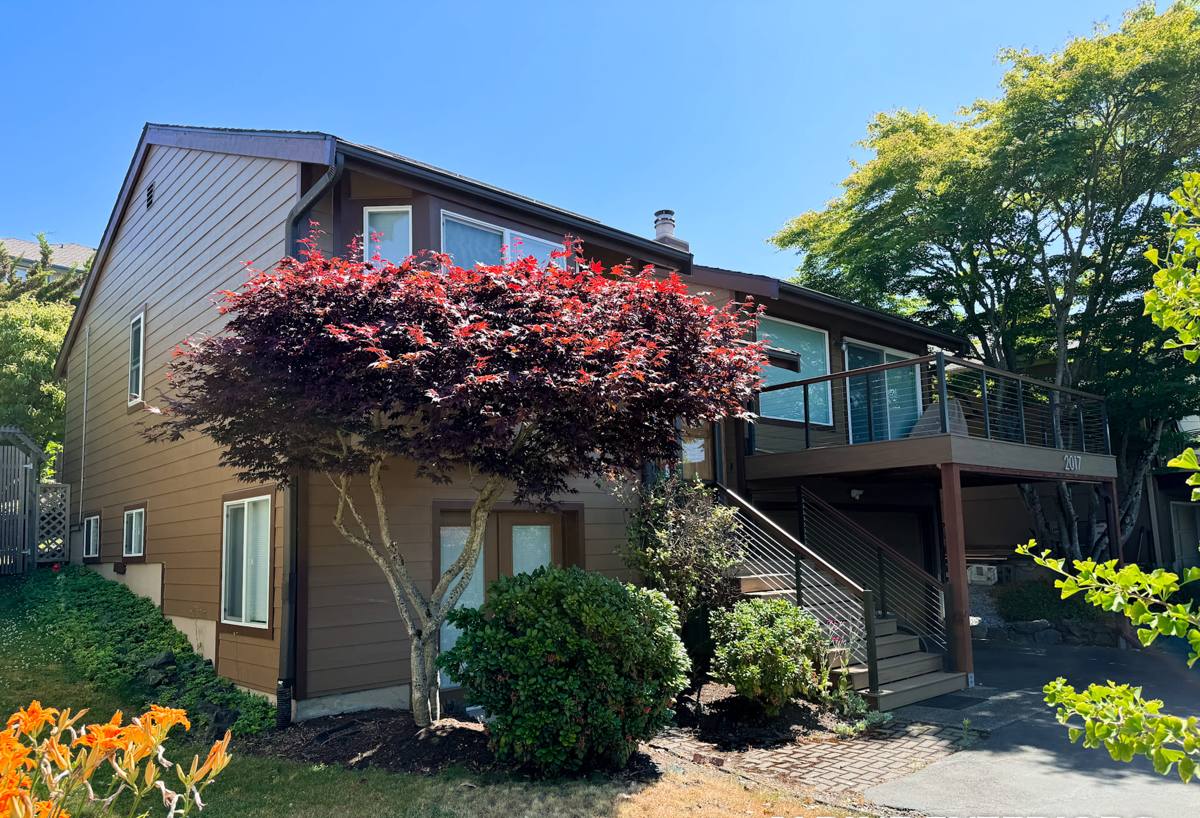
A lot of Queen Anne's housing stock is older, with steep-pitched roofs on craftsman bungalows, Tudor-influenced homes, and mid-century builds that were designed as much for looking good on a view lot as for shedding water fast. Steep roofs drain quickly, which is good, but they also complicate access, safety, and how repairs get staged — which matters when you're choosing who does the work.
Why Salt Air, Rain, and Moss Are a Combined Problem
Each of these issues is manageable on its own. Together, they compound. Salt-laden air accelerates corrosion on exposed metal fasteners, flashing, and vent caps faster than it would further inland. Driving rain finds any gap in that corroded metal and pushes water where it doesn't belong. And moss — which thrives in Seattle's shaded, damp, tree-covered neighborhoods — holds moisture against the roof surface long after the rain has stopped, keeping shingles and flashing wet for days at a time.
That constant dampness is the real enemy. It's not one hard freeze or one big storm that damages most Queen Anne roofs — it's months of shingles and flashing staying wetter, longer, than they were built to tolerate. Over time that softens roof decking, lifts shingle edges, and works corrosion into fasteners and flashing seams.
Where Trees and Shade Make It Worse
Queen Anne's mature tree canopy is part of the neighborhood's character, but overhanging limbs mean more shade, more debris in valleys and gutters, and more organic material sitting on the roof feeding moss growth. Homes tucked under tree cover typically need moss treatment and debris clearing more often than homes on open, sun-exposed lots nearby.
Signs a Queen Anne Roof Needs Repair — Not Full Replacement
Most roofs don't fail all at once. They fail in specific spots, and catching those spots early is what keeps a repair a repair instead of turning into a replacement. Watch for:
- Green or black streaking, or visible moss patches, especially on north-facing or shaded slopes
- Granules collecting in gutters or at downspout outlets — a sign shingles are wearing thin
- Curling, lifted, or cracked shingle edges, particularly on steep south- and west-facing slopes exposed to wind-driven rain
- Rust staining or visibly corroded flashing around chimneys, vent pipes, and skylights
- Water stains on interior ceilings near exterior walls, which often point to flashing failure rather than a failed field of shingles
- Soft or spongy spots underfoot when a roofer walks the surface — a sign moisture has reached the decking
- Daylight visible through the attic at roof penetrations or ridge lines
Any one of these, caught early, is usually a targeted repair. Left alone through another wet season, several of them together often mean the deck underneath has started to take on damage — and that changes the scope and cost of the job considerably.
What an Actual, Correct Repair Involves
A roof repair done right isn't just swapping a few shingles and calling it done. It starts with finding the real source of the problem, which is often several feet away from where the leak actually shows up inside the house — water travels along decking and framing before it drips somewhere visible.
The Core Steps
- Diagnose from the roof, not just the ceiling stain. We trace water paths back to their actual entry point — usually flashing, a penetration, or a valley, not the open field of the roof.
- Remove and inspect the decking underneath. If plywood or sheathing has softened from prolonged moisture, that section gets replaced before anything new goes back on top. Patching over soft decking just hides the problem.
- Replace flashing with proper material and technique. Step flashing, counter-flashing, and valley flashing all need to be layered correctly with the roofing material so water sheds over each layer, not behind it.
- Match roofing material as closely as possible. New shingles or panels are integrated with existing courses so water flow isn't disrupted at the seam between old and new.
- Address moss and organic buildup before closing up the repair. There's no point sealing a roof back up over moss that will keep holding moisture against the new work.
- Verify with a water test where needed. On tricky valleys or chimney areas, we'll run water over the repair before considering the job finished.
Roof Types Around Queen Anne and What They Typically Need
Different roofing materials fail differently, and the right repair approach depends on what's actually up there.
| Roof Type | Common Queen Anne Issue | Typical Repair Approach |
|---|---|---|
| Composition (asphalt) shingle | Granule loss, curling on steep wind-exposed slopes, moss holding moisture at shaded edges | Section replacement matched to existing shingle line, flashing renewal, moss removal and treatment |
| Wood shake or shingle | Splitting and moisture absorption, accelerated by shade and salt-tinged damp air | Selective shake replacement, ventilation check, targeted moss and debris clearing |
| Standing seam or metal panel | Fastener corrosion, seam separation at flashing points | Fastener and sealant renewal, seam re-sealing, corrosion-resistant hardware replacement |
| Flat or low-slope (additions, porches) | Ponding water, membrane seam failure at low points | Membrane patch or seam repair, drainage correction to eliminate ponding |
Whatever the material, repairs get matched to what's already installed rather than introducing a mismatched product just because it's convenient. A patch that doesn't match the existing system's expansion, drainage, and flashing behavior tends to fail again at the seam within a season or two.
How Our Process Works
We keep the process straightforward because most homeowners just want to know the roof is fixed and won't be a recurring problem.
- Initial look and estimate. We assess the affected area, check the attic if accessible, and give you an honest read on whether this is a repair or something bigger.
- Written scope before any work starts. You'll know what's being replaced, what flashing is involved, and roughly what it costs before we're on the roof.
- Careful staging on steep or hard-to-access roofs. Queen Anne's hillside lots and steep pitches mean access and fall protection get planned before work begins, not improvised on the day.
- The repair itself, following the diagnose-then-fix sequence above rather than a quick surface patch.
- Cleanup and a final walk-through so you can see what was done and ask questions before we consider the job complete.
Cost Factors Worth Understanding
Roof repair pricing varies enough from job to job that a flat number isn't honest. What actually drives cost:
| Factor | Why It Matters |
|---|---|
| Extent of decking damage | Soft or rotted sheathing adds material and labor beyond the surface repair |
| Roof pitch and access | Steep Queen Anne roofs often need additional fall protection and staging time |
| Flashing complexity | Chimneys, skylights, and multiple valleys take more time to flash correctly than open shingle field |
| Material match availability | Older or discontinued shingle and shake profiles can be harder to match seamlessly |
| Moss and debris removal | Heavily mossed roofs need cleaning and treatment as part of the job, not just the patch |
Most straightforward flashing or shingle-section repairs land in a modest range; jobs involving deck replacement or complex multi-valley flashing cost more. We'll always walk you through which factors apply to your roof specifically before quoting.
Repair or Replacement — How to Tell
This is the question that matters most, and it deserves an honest answer rather than a sales pitch either direction. A repair makes sense when the damage is localized — one bad valley, a failed flashing run, a patch of worn shingles — and the rest of the roof still has useful life left. Replacement becomes the smarter call when multiple areas are failing at once, the decking has widespread moisture damage, or the roof is old enough that fixing one area just means we'll be back for the next area in a year or two. We'll tell you plainly which situation you're in, including when a repair is genuinely the right and more economical choice, even though a full replacement would be a bigger job for us.
A Realistic Seasonal Maintenance Plan
Between repairs, a little seasonal attention goes a long way in Queen Anne's climate:
- Clear gutters and valleys of leaves and debris at least twice a year, more often under heavy tree cover
- Check for moss growth each fall before the wet season sets in, and treat it before it spreads
- Have flashing around chimneys and skylights visually checked every year or two, since these are the first points to fail
- Trim back overhanging branches where safe to do so, to reduce shade, debris, and moss-friendly conditions
- After any major windstorm off the Sound, do a quick visual check for lifted or missing shingles
Why Local Experience in This Neighborhood Matters
A crew that regularly works Queen Anne's hillside streets already understands the access constraints, the steep-pitch safety requirements, and the specific combination of wind exposure, shade, and moisture that shapes how roofs fail here. That's not something you can fully substitute with general roofing experience from flatter, more sheltered parts of the Seattle area or elsewhere in King County. Knowing which parts of a roof typically go first in this kind of exposure means less time spent diagnosing and more time spent fixing the actual problem.
If you're seeing signs of a leak, moss buildup, or aging flashing on your Queen Anne roof, we're happy to take a look and give you a straight answer — repair, replacement, or just keep an eye on it. Reach out for a free, no-pressure estimate using the form below.