 Seattle
 Roof Repair Built for Redmond's Weather, Not a National Playbook
Redmond sits in a part of King County where roofs work hard for their keep. Long stretches of driving rain in the fall and winter, damp air rolling in off the Sound, and moss seasons that can run six months or longer all add up to a specific kind of wear that doesn't show up the same way in drier climates. A roof repair here isn't just patching a leak — it's understanding why that leak formed in the first place, and whether the same conditions are quietly working on the rest of the roof too.
We work on homes throughout Redmond and the broader Eastside on a regular basis, which means we're not guessing at how local roofs age. We see the same failure patterns repeat: moss lifting shingle edges, gutters overwhelmed by sustained rain events, and flashing that was fine for years until one wet winter finally found the gap. Good repair work starts with recognizing those patterns, not just sealing the spot where water happens to be showing up inside the house.
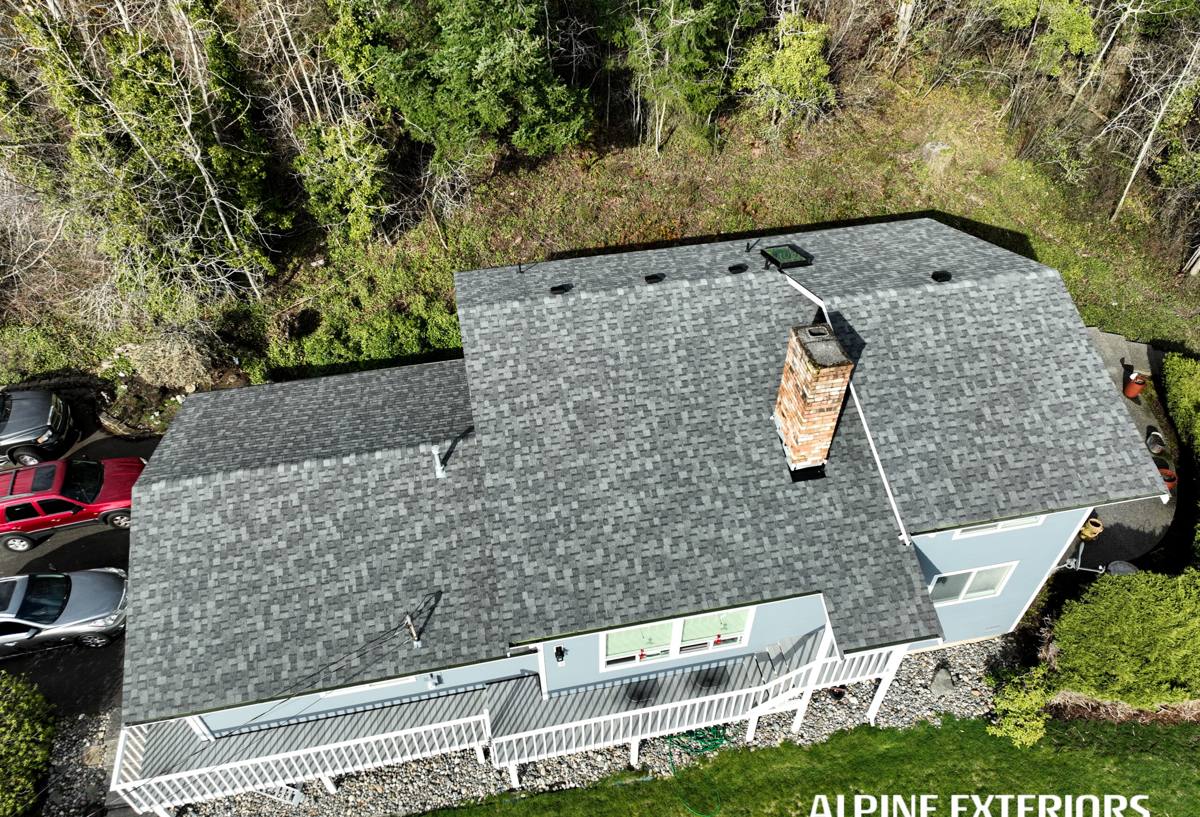
Why Redmond's Climate Is Tougher on Roofs Than It Looks
Moss Season Is Longer Than Most Homeowners Realize
Moss doesn't just grow on old roofs. Shade from mature trees, north-facing slopes, and the steady moisture that King County gets for much of the year create ideal conditions on roofs of almost any age. Once moss establishes itself, it holds water against the roofing material far longer than open air ever would, and its root structure works into shingle granules and seams. Left alone, this accelerates wear on the exact areas most likely to leak first — valleys, edges, and anywhere water naturally slows down.
Driving Rain Finds the Weak Points
A lot of roof leaks in this region aren't from rain falling straight down — they're from wind-driven rain pushed sideways into flashing, vents, and siding transitions. That kind of rain exploits small gaps that would never leak in calmer weather. It's a big reason why a repair that looks solid in dry conditions can still fail during the next real storm if the underlying flashing and underlayment weren't addressed.
Salt Air and Moisture Cycling
Homes closer to the water pick up salt-laden air that accelerates corrosion on metal flashing, fasteners, and vents. Combined with the constant wet-dry cycling typical of a Pacific Northwest winter, metal components can degrade faster than the roofing material around them. A repair that only addresses the visible shingle damage and ignores aging metal flashing is often a short-term fix.
What a Correct Roof Repair Actually Involves
A proper repair isn't just about stopping the drip you can see. It requires tracing water back to its actual entry point, which is often several feet from where the interior stain or damp spot shows up — water travels along rafters and sheathing before it finds a way through the ceiling. Here's what that process typically covers:
- Identifying the true point of water entry, not just the visible symptom
- Checking flashing around chimneys, skylights, vents, and roof-to-wall transitions
- Inspecting underlayment condition in the affected area, not just the top layer of shingles
- Assessing moss and debris buildup as a contributing cause, not a cosmetic issue
- Confirming gutters and downspouts are actually moving water away from the repair area
- Checking attic ventilation, since poor airflow can trap moisture and accelerate rot from the inside
Skipping any of these steps tends to produce the same result: a repair that holds for a season or two and then reappears, often in a slightly different spot, because the underlying cause was never addressed.
Common Redmond Roof Repair Scenarios
Moss-Related Shingle Lift
This is one of the most common calls we get in this area. Moss growing under shingle tabs lifts them slightly, breaking the seal and allowing wind-driven rain underneath. The fix involves careful moss removal, shingle re-adhesion or replacement where damaged, and often a review of tree cover and roof shading that's contributing to regrowth.
Flashing Failure at Penetrations
Vent pipes, skylights, and chimney flashing are common leak points because they rely on seals and metal work that degrade over time. Once caulking dries out or metal corrodes, water gets in even though the surrounding shingles look fine. These repairs are about replacing the flashing correctly, not just re-caulking over a failing seal.
Valley and Gutter Overflow Damage
Roof valleys concentrate a large volume of water during heavy rain. If valley flashing is undersized, aged, or partially blocked by debris, water can back up and find its way under adjacent shingles. This often shows up alongside gutter overflow, since the two problems tend to compound each other during sustained storms.
Repair vs. Replacement: How We Help You Decide
Not every roof problem calls for a full replacement, and not every leak is a simple patch. The right call depends on the roof's age, how widespread the damage is, and whether the repair would be addressing a root cause or just buying time. We walk homeowners through this honestly rather than defaulting to the more expensive option.
| Factor | Favors Repair | Favors Replacement |
|---|---|---|
| Roof age | Under 15 years, otherwise sound | Nearing or past expected lifespan |
| Damage extent | Isolated to one area or penetration | Spread across multiple sections |
| Moss/algae history | Recent or first occurrence | Long-term, recurring damage to decking |
| Underlayment condition | Intact in affected area | Deteriorated or missing in multiple spots |
| Cost pattern | One-time, targeted fix | Repeated repairs over recent years |
When a roof is a genuine repair candidate, we say so and explain what we're doing and why. When the evidence points toward replacement being the more honest long-term answer, we explain that too, including the trade-offs, rather than letting a homeowner sink money into a roof that's past the point of targeted fixes.
Our Process for Redmond Roof Repairs
- Inspection and diagnosis — We look at the roof from both the exterior and, where accessible, the attic side, since interior signs often reveal more about water travel than the surface does.
- Clear explanation — Before any work starts, we explain what we found, what's causing it, and what the repair will and won't fix.
- Targeted repair — We address the actual cause — flashing, underlayment, moss, ventilation — not just the visible symptom.
- Follow-up check — We confirm the repair is holding, especially important given how much our rainy season tests a roof over consecutive months.
We also flag anything else we notice while we're up there, like early gutter wear or a section of moss that's starting to establish, so homeowners can plan ahead instead of getting surprised by a second issue mid-winter.
Preventive Maintenance That Actually Reduces Future Repairs
Redmond's climate rewards homeowners who stay ahead of small problems. A few habits go a long way toward reducing how often a roof needs reactive repair work:
- Have moss treated or removed before it spreads across a full slope, not after
- Clean gutters at least twice a year, more often if there's heavy tree cover nearby
- Trim back branches that keep sections of the roof shaded and damp
- Schedule a roof check after any major windstorm, even if nothing looks obviously wrong
- Address small flashing issues promptly rather than waiting for an active leak
None of this eliminates the need for repairs entirely — the climate here is simply demanding — but it does reduce how often small issues turn into interior damage.
Why Hiring a Crew That Already Works in Redmond Matters
Roofing crews who mostly work in drier regions sometimes underestimate how aggressively moss, sustained rain, and salt-tinged coastal air work on a roof here. A crew that regularly works Redmond and the surrounding King County area already knows which flashing details tend to fail first in this climate, which roof orientations collect the most moss, and how local drainage patterns affect valley and gutter performance. That familiarity shows up in the quality of the diagnosis as much as the repair itself.
It also matters for scheduling. Storm damage and leak calls tend to cluster during the same wet weeks every year, and a crew already working in the area can typically respond faster than one traveling in from farther out.
Get an Honest Assessment of Your Roof
If you're dealing with a leak, staining on an interior ceiling, or visible moss buildup on your Redmond roof, we're glad to take a look and give you a straight answer about what's going on and what it will take to fix it. There's no pressure and no obligation — just a clear, honest assessment from a crew that knows how this climate treats roofs. Fill out the form below to request a free estimate.