 Seattle
 Custom Decks Built for Shoreline's Marine Climate
Shoreline sits right along Puget Sound in King County, and that location shapes what a deck has to survive here. Homes just a short walk from the water deal with salt-tinged air, rain that blows in sideways off the Sound rather than falling straight down, and a moss and mildew season that can run most of the year on shaded or north-facing decks. A deck design that would hold up fine in a drier inland climate can fail early here if it wasn't built with these specific conditions in mind. We build custom decks for homeowners throughout Shoreline and the surrounding Seattle area, and the way we frame, fasten, and finish a deck reflects what we've actually seen go wrong on decks in this exact climate.
A deck in Shoreline isn't just an outdoor living space, it's an exterior structure attached to your house, exposed to weather nearly every day of the year. Getting the structural details right matters as much as picking a decking material you like the look of.
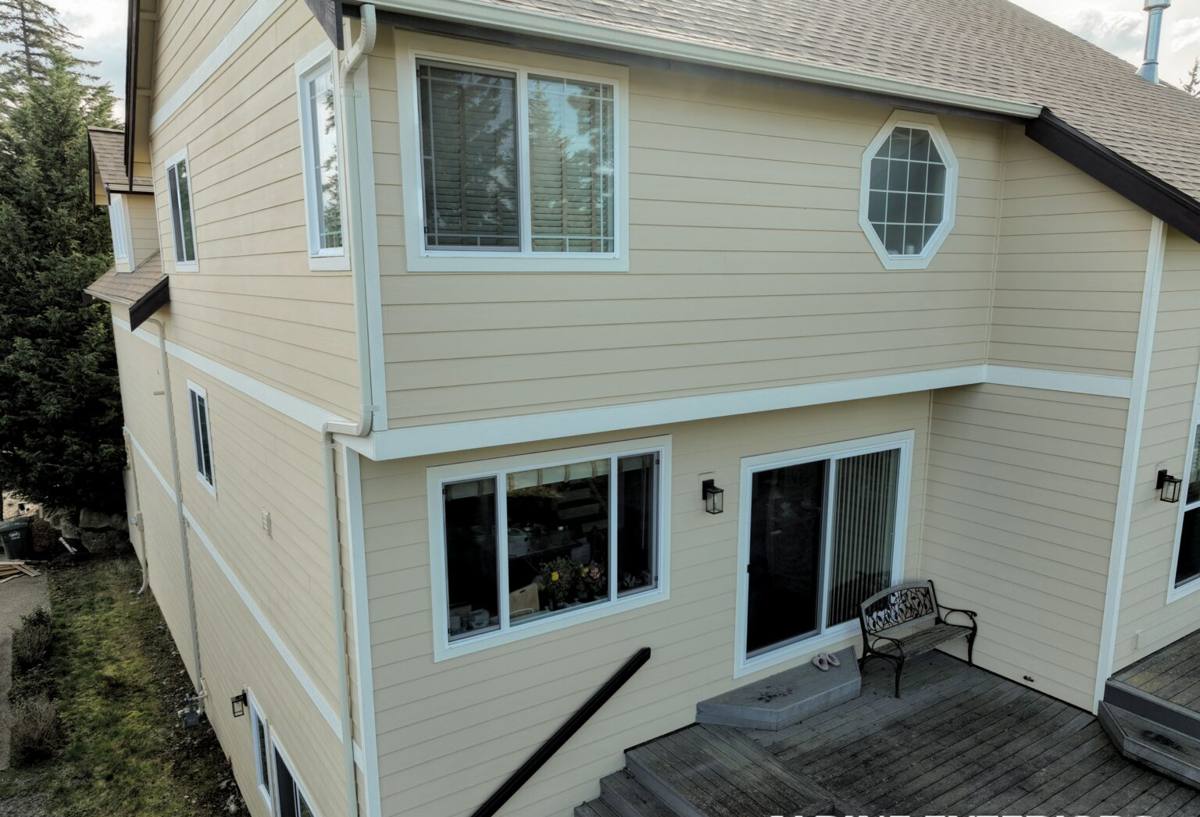
What Shoreline's Climate Does to a Deck
Salt Air and Corrosion
Proximity to Puget Sound means a steady presence of salt-laden moisture in the air, even on days that aren't obviously stormy. Over years, that air accelerates corrosion on lower-grade fasteners, brackets, and hardware. A deck built with the wrong fastener spec can develop rust streaks, loosening connections, and staining well before the decking material itself shows its age.
Driving Rain and Hidden Moisture
Rain here often arrives with wind behind it, which pushes water into places a straight-down rainfall wouldn't reach: under ledger boards, behind rim joists, and into fastener holes. The ledger connection, where the deck attaches to the house, is one of the most important and most commonly mishandled details on any deck in this region. Water that tracks behind an improperly flashed ledger can rot the rim joist and even the house's wall framing long before it's visible from the deck surface.
A Long Moss and Mildew Season
Mild, damp conditions for much of the year mean moss, algae, and mildew growth on deck surfaces, especially in shaded yards or under tree cover common throughout Shoreline's residential neighborhoods. Moss holds moisture against whatever it grows on, and on a wood deck that means accelerated rot in exactly the spots that don't get sun or airflow to dry out between rains.
Decking Material Options for Shoreline Homes
There's no single right decking material for every homeowner, but there are real trade-offs worth understanding before you choose, especially given how much moisture this climate puts a deck through.
| Material | Moisture & Salt-Air Performance | Maintenance | Typical Cost Tier |
|---|---|---|---|
| Pressure-treated wood | Decent if sealed regularly; end grain and fastener holes are vulnerable | Annual cleaning and re-sealing to prevent moss and rot | Lowest upfront cost |
| Cedar | Naturally rot-resistant but still needs sealing in this much rain | Regular cleaning, periodic oiling or staining | Mid-range |
| Capped composite | Strong resistance to moisture absorption and salt exposure | Occasional washing, no sealing or staining | Mid to upper range |
| Uncapped composite | Better than wood but more prone to moisture absorption at cut edges than capped products | Low, but edge sealing matters at install | Mid-range |
| Aluminum decking | Excellent, does not rot, warp, or feed moss growth | Minimal | Highest upfront cost |
We'll walk through these trade-offs with you directly rather than steering you toward whatever happens to be easiest for us to install. The right choice usually comes down to how much maintenance you actually want to keep up with over the life of the deck, not just the sticker price on day one.
What a Correctly Built Deck Requires Here
The decking surface is the part homeowners see and choose, but the structure underneath it is what determines whether the deck lasts. In a climate this wet, a few details matter more than they would elsewhere.
- Properly flashed ledger board: The connection to your house needs correct flashing and a water-resistant barrier so driving rain can't track behind it into the rim joist or wall framing.
- Joist tape on framing: Covering the tops of joists and beams with a waterproofing membrane keeps standing moisture from soaking into the wood through fastener penetrations.
- Corrosion-resistant fasteners and hardware: Stainless steel or coated fasteners rated for the moisture and salt exposure common near Puget Sound, not generic hardware that will rust and stain over time.
- Proper drainage and airflow underneath: Decks built low to the ground or over poorly graded soil trap moisture and encourage rot and moss growth from below, not just above.
- Footings sized and set for local soil and frost conditions: A deck is only as stable as what it's anchored to, and that's not a place to cut corners.
None of this is visible once the deck is finished, which is exactly why it's the part that gets skipped when a job is priced too low. We build it right the first time because we're the ones who get the call when a corner-cut deck starts failing three or four years in.
Our Deck-Building Process
Design and Site Visit
We start by walking the property with you, talking through how you actually want to use the space, and looking at drainage, sun exposure, and how the deck will tie into your home. Shoreline lots vary quite a bit in slope and tree cover, and those site conditions affect both design and footing layout.
Permitting
Most new decks attached to a home, and many freestanding decks above a certain height, require a building permit in Shoreline and King County. We handle that process as part of the job rather than leaving it for the homeowner to sort out, and we build to the code requirements that apply to your specific property.
Construction and Inspection
We frame first, with attention to the ledger connection, joist spacing, and hardware detailed above, then move to decking, railings, and any stairs or built-in features. Permitted work gets inspected along the way, which is a useful check on the structural work even beyond our own standards.
Railings, Fasteners, and Hardware in a Marine Environment
Railings and hardware take the same salt-air exposure as the decking itself, and they're often where corrosion shows up first because the metal components are smaller and more exposed. We spec stainless steel or marine-rated coated hardware for connections and railings on decks in Shoreline and other Puget Sound-adjacent neighborhoods, rather than the standard galvanized hardware that's fine in a drier inland climate but tends to streak and weaken faster here. Cable railings, in particular, need corrosion-resistant components throughout, since a single weak fitting can compromise the whole system over time.
Signs an Existing Shoreline Deck Needs Attention
- Soft, spongy, or discolored boards, especially near the ledger board or in shaded areas
- Moss or algae that returns quickly after cleaning
- Rust staining around fasteners, brackets, or railing posts
- Gaps, movement, or a slight bounce where the deck meets the house
- Loose or wobbly railings and posts
- Standing water that doesn't drain within an hour or two after rain stops
Some of these are simple maintenance items. Others point to structural moisture damage that's worth having looked at before it spreads into the framing or the house itself.
Maintenance in a Wet, Mossy Climate
However well a deck is built, this climate still asks something of the homeowner. Wood and uncapped composite decks need periodic cleaning to keep moss and mildew from establishing, along with resealing or staining on the schedule appropriate to the material. Capped composite and aluminum decks cut that maintenance down significantly but aren't entirely maintenance-free, occasional washing keeps them looking right and clears debris that would otherwise trap moisture against the surface. Whatever material you choose, keeping gutters and downspouts clear near the deck and trimming back overhanging vegetation both go a long way toward slowing moss growth and keeping the deck surface dry enough to actually enjoy.
Why Hire a Crew That Already Works in Shoreline
A deck built to a generic national spec sheet can look fine on install day and still fail early in a climate like this one. We build decks throughout Shoreline and the broader Seattle area regularly enough to know which details actually matter here, salt-air hardware, ledger flashing, drainage, and framing choices that account for a long wet season rather than a handful of rainy weeks a year. That local, repeated experience is part of what you're paying for when you hire a deck builder, not just the labor to assemble a kit.
If you're planning a new custom deck or need an honest look at one that's showing its age, we're glad to come take a look. Reach out for a free, no-pressure estimate using the form below.