 Seattle
 Why University District Siding Wears Differently
University District sits inside Seattle, King County, in a climate that never really lets siding dry out for long. The driving rain that blows in off the Sound doesn't fall straight down — it hits walls at an angle, working into seams, butt joints, and anywhere caulking has started to give. Add a long moss season and mature tree canopy on many of the neighborhood's older lots, and you get siding that stays shaded and damp on the north and west elevations well after the rest of the house has dried. Salt-tinged marine air moving through the greater Seattle area adds a slower, quieter problem: it accelerates corrosion on fasteners, flashing, and any exposed metal trim, which is often what fails before the siding boards themselves do.
None of that means siding is doomed here — it means repairs have to account for how the damage actually happened, not just patch what's visible. A board that looks cracked on the surface may be reacting to moisture that's been sitting behind it for a season or two. Fix the crack without addressing the path water took to get there, and the same spot fails again within a year or two.
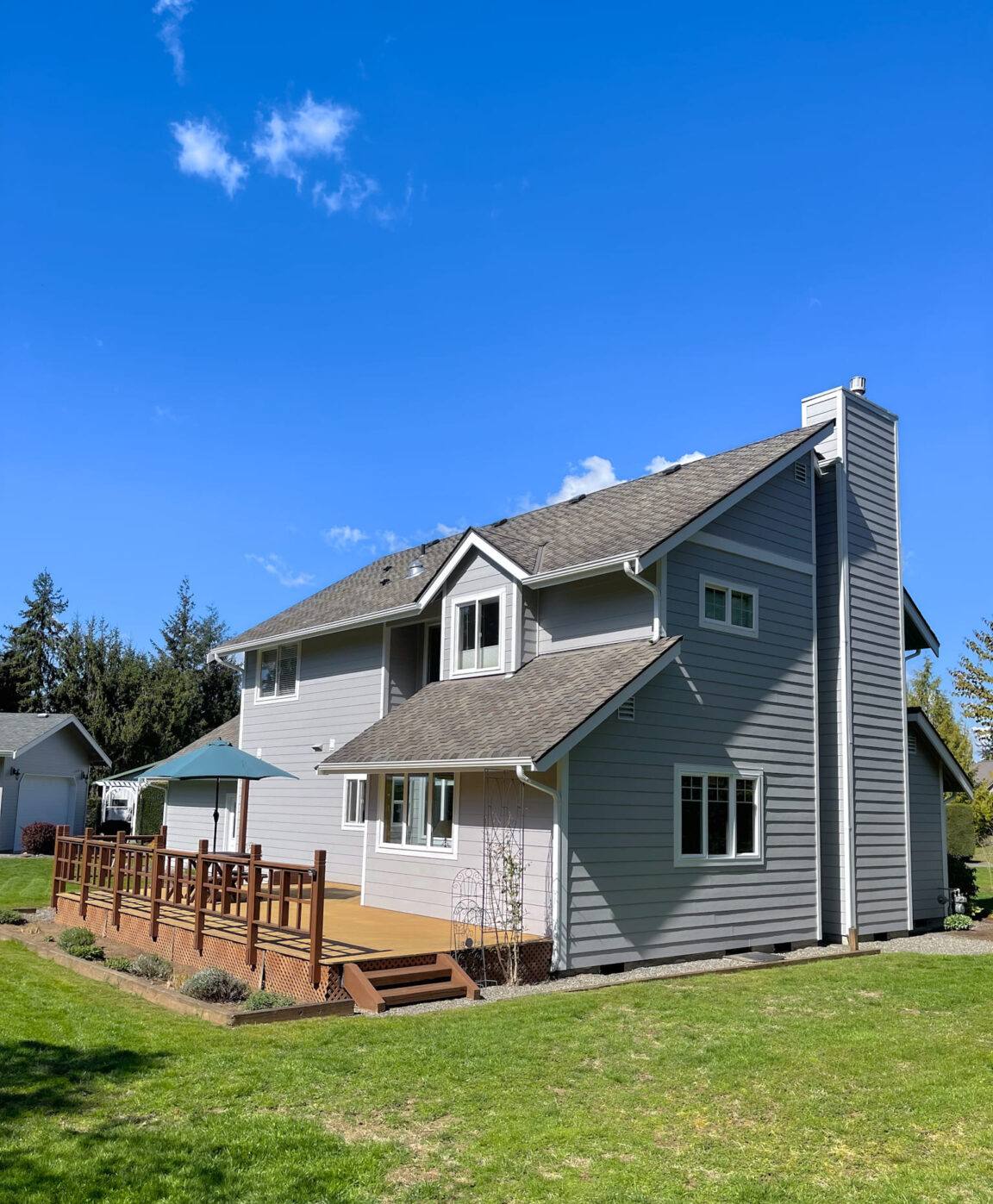
Signs Your Siding Needs Repair, Not Replacement
Most siding problems in this neighborhood show up as small, localized issues long before they become a whole-house replacement. Catching them early is what keeps a repair a repair.
- Soft or spongy spots when you press on a board, especially near the bottom edge
- Cracked, split, or buckling boards, most often on shaded north or west-facing walls
- Paint or caulking failing faster in one area than the rest of the house
- Moss or algae that keeps coming back within months of being cleaned off
- Visible gaps at seams, corners, or trim where wind-driven rain can track behind the cladding
- Rust streaking or staining running down from fastener heads or metal trim
If what you're seeing matches one or two of these in a specific spot, a targeted repair is usually the right call. If it's showing up across multiple elevations, that's a different conversation, covered below.
What a Homeowner Can Check Before Calling
A quick walk around the exterior after a windy, rainy stretch tells you a lot. Look at inside corners, around window and door trim, and anywhere two different materials meet — those transitions are where water finds a way in first, long before the open field of siding shows any wear.
What a Correct Repair Job Actually Involves
Diagnosing the Moisture Path, Not Just the Symptom
Before any board comes off, the job is figuring out how water got to the damage in the first place — a failed kickout flashing above a lower roofline, a gap at a window head, or caulking that shrank and pulled away from a joint. Pull a damaged board without tracing that path and you risk sealing a new board over the same leak.
Matching Material, Profile, and Color
A patch that doesn't match the existing reveal, texture, or color stands out for years. On repairs to Hardie fiber cement, that means matching plank width and exposure exactly and, where the factory finish has weathered, discussing honestly with the homeowner whether a spot-matched touch-up or a slightly larger repair area will actually blend in.
Flashing and Sealant Done to Spec, Not Just Caulked Over
Correct repair means proper flashing behind any horizontal trim or window head that's part of the repair area, house wrap integrated correctly at the new seam, and sealant used only where it's actually supposed to carry the waterproofing — not as a substitute for flashing that should be there.
Cleanup and Disposal
Old siding, especially anything with lead paint from a pre-1978 home, gets bagged and disposed of properly rather than left in a pile or swept into the yard waste bin. That matters more than it sounds like on older University District housing stock.
Repair vs. Replace: How We Make the Call
| Factor | Repair usually makes sense | Replacement usually makes sense |
|---|---|---|
| Extent of damage | Isolated boards, corners, or seams | Damage spread across multiple elevations |
| What's behind the siding | Sheathing is dry and sound at the damaged spot | Soft, delaminating, or stained sheathing found during inspection |
| Age and condition of existing siding | Hardie or comparable product still within its service life | Original wood, aging vinyl, or a product past its practical lifespan |
| Color and profile match | Current product or a close match is still available | Discontinued profile, or fading is uneven across the whole house |
| Repeat problem areas | First occurrence at that location | Same spot has already been patched more than once |
We'll tell you honestly which column your house falls into. A repair that's going to fail again in a year isn't a favor to anyone, and a full tear-off on a house that needs three boards fixed isn't either.
Our Process for University District Repair Calls
Inspection and Diagnosis
We look at the damaged area and the surrounding field, check for the moisture path, and probe the sheathing where there's any doubt about hidden damage. You get a straight answer on scope before any work starts.
A Written, Itemized Quote
You'll know what's being replaced, what's being re-flashed or re-caulked, and what the color/material match looks like, before you approve anything.
Scheduling That Fits a Dense Urban Neighborhood
University District is tighter and busier than a lot of the areas we work — narrow lots, on-street parking pressure, and a mix of owner-occupied homes and rentals near campus. We plan material staging, debris removal, and crew scheduling around that reality instead of treating every job like it's on a wide suburban lot.
Execution and Cleanup
Repairs are completed to the same flashing and fastening spec as new installation work, not shortcut because it's "just a patch." The site gets cleaned and any lead-paint-era debris is bagged and hauled properly.
Why We Repair — and Install — Only James Hardie Fiber Cement
When a repair calls for new material, or when repeated repairs point toward a section that should just be replaced, we only use James Hardie fiber cement. We don't install LP SmartSide, vinyl, Cemplank, Allura, primed spruce, or cedar, and we think that's worth explaining rather than just stating.
Hardie's HZ5 formulation is engineered for exactly the moisture load the Pacific Northwest puts on a wall — it doesn't absorb water the way wood-based siding can, and it's non-combustible, which isn't a small detail for insurance purposes in a dense neighborhood like this one. The ColorPlus factory finish holds color longer than field-applied paint, which matters when you're trying to match an existing wall years after the original install. And Hardie's transferable warranty is a real, well-documented program rather than a marketing line. None of that makes other products bad — it's why our crews standardized on one system we can install, flash, and repair to a consistent spec, house after house.
Why Hiring a Crew That Already Works This Neighborhood Matters
University District has a distinct mix of housing: early-1900s craftsman bungalows, mid-century infill, and newer construction squeezed onto older lots, often side by side on the same block. Each era handled sheathing, trim, and weather barriers differently, and a crew that's worked the neighborhood recognizes those differences on sight instead of learning them on your dime. Seattle's permitting process (through the city's Department of Construction and Inspections) and any applicable code requirements for exterior work also move faster when the contractor already knows the local process rather than figuring it out for the first time on your project.
There's also a practical side: access. Narrow lots, shared driveways, and heavy on-street parking near campus mean staging material and running a repair crew takes planning most contractors from outside the area don't think about until they're already blocking a neighbor's driveway.
Maintaining Siding Between Repairs
A repair holds longer when the rest of the siding is kept up. None of this is complicated, but it's the part that gets skipped.
- Rinse siding — not high pressure — once or twice a year to keep moss and grime from taking hold
- Keep gutters clear so overflow doesn't run straight down the wall face
- Trim back tree limbs and shrubs that keep a section of wall shaded and damp longer than the rest of the house
- Re-caulk seams and trim joints on the schedule your installer recommends, not only once it looks visibly bad
- Walk the exterior after a major windstorm and check for loosened boards, trim, or flashing
If you're seeing damage in University District — a cracked board, a persistent damp patch, or moss that won't stay gone — we're happy to take a look and give you a straight, no-pressure read on what it actually needs. A free estimate costs you nothing and tells you whether you're looking at a repair or something bigger.