 Seattle
 Storm Damage Roof Repair in Capitol Hill: Why This Climate Tests Roofs Hard
Capitol Hill sits up on one of Seattle's higher, more exposed ridgelines, and that elevation means roofs here take a harder hit from wind than a lot of more sheltered lots elsewhere in King County. Add in salt-tinged air moving in off the water, driving rain that hits roof planes and wall-to-roof transitions from the side instead of straight down, and a moss season that runs across most of the year, and you've got a climate that never really lets a roof rest. Every seam, fastener, and flashing detail is being tested constantly, not just during the one storm that finally causes a visible leak.
Storm damage repair is a specific kind of roofing work, different from routine maintenance. It's about responding to a discrete event — a windstorm, a heavy rain system, a falling branch — that caused sudden, dateable damage, and doing it in a way that stabilizes the roof quickly, documents what happened clearly, and fixes the actual failure rather than just patching the symptom. On a neighborhood like Capitol Hill, with its mix of older single-family homes, converted duplexes, and multi-unit buildings packed close together, getting that response right matters both for the building itself and for the people living under it.
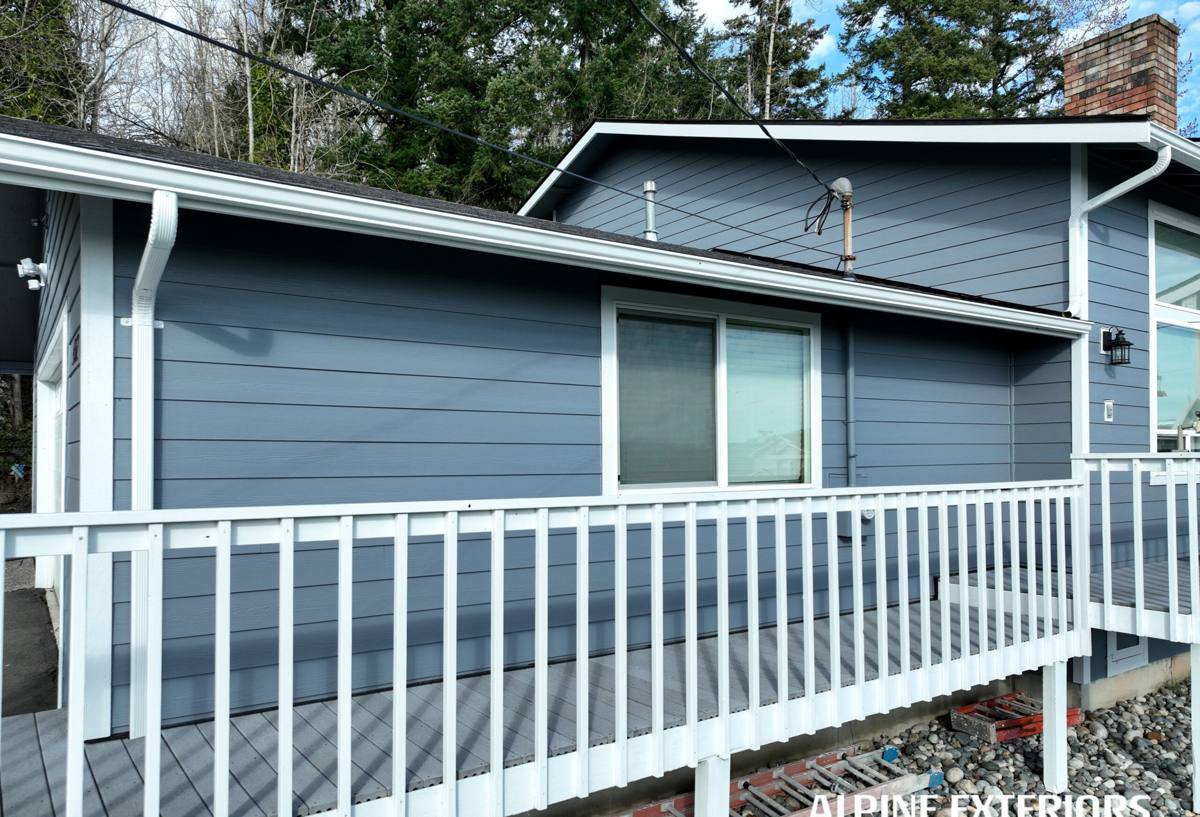
What Actually Counts as Storm Damage
Wind Damage
Sustained wind and gusts lift shingle tabs, break the adhesive seal strip that keeps shingles locked flat, and in the worst cases tear shingles off entirely. Even when a shingle doesn't blow off, a broken seal can leave it flapping in future wind events, which wears the shingle and the ones around it faster than normal aging would. Ridge cap shingles, sitting at the highest and most wind-exposed line on the roof, are often the first to show cracking or loosening after a windstorm.
Wind-Driven Rain Intrusion
Roofing systems are built to shed water moving downward, not water being pushed sideways or upward under a shingle edge by wind pressure. During a real storm, wind-driven rain finds every valley, every step-flashing joint at a wall or chimney, and every spot where a seal has already started to weaken, and pushes water past details that would hold up fine in ordinary rain. This is usually where storm damage turns into an active interior leak rather than staying a roof-only problem.
Impact and Debris Damage
Falling branches, blown debris, and hail in isolated events can crack shingles, dent metal roofing or flashing, and in worse cases puncture the underlayment beneath the surface layer. Impact damage is sometimes obvious — a branch still sitting on the roof — but small punctures from debris that's since blown off can go unnoticed until they start leaking weeks or months later.
Damage You Can't See From the Ground
A lot of storm damage isn't visible from the sidewalk, which is part of why a proper post-storm inspection matters even when nothing looks obviously wrong. The signs worth checking for include:
- Granules collecting in gutters or at downspout outlets, which signals accelerated shingle wear
- Water staining or a musty smell in the attic, especially near valleys, chimneys, or roof-to-wall junctions
- Daylight visible through roof decking from inside the attic
- Soft, spongy decking underfoot if a roofer walks the surface
- Lifted or curled shingle edges that aren't flat against the roof plane
- Flashing that's visibly bent, separated, or pulled away from a chimney, skylight, or wall
Any one of these is worth a call. Left alone, hidden storm damage tends to get more expensive the longer it sits, because water finding its way past the roofing layer eventually reaches decking and framing, and that's a different, more costly repair than fixing the roofing surface itself.
How We Handle a Storm Damage Repair Call
Our process on a storm damage call is built around stopping active water intrusion first and doing the paperwork and permanent repair right after, in that order.
Stabilize First
If a roof has active exposed decking, missing shingles, or a hole from debris impact, the first step is a temporary tarp or cover to stop water from getting in while the rest of the process plays out. This isn't the fix — it's buying time so the permanent repair can be scoped correctly instead of rushed.
Full Inspection and Documentation
Once the roof is stable, we walk the entire roof surface, not just the area that's obviously damaged, since storm events often affect more of the roof than the one spot that leaked first. We document what we find with photos and a written description tied to the storm event, which matters if the repair is going through a homeowner's insurance claim.
Scope and Repair
From there we give a clear, written scope — what's being repaired, what materials are being used, and why — before any work starts. Repairs are done to match the surrounding roofing as closely as possible, with flashing and underlayment details brought up to a standard that holds up under this area's wind and rain rather than just patched to look right.
Cleanup and Follow-Up
Debris and old material get cleared from the property, gutters and downspouts get checked for granules or blockages from the event, and we let the homeowner know what to watch for in the following weeks in case anything was missed on the surface inspection.
Repair or Replace? How We Make the Call After Storm Damage
Not every storm-damaged roof needs full replacement, and not every roof that looks fine after a storm actually is. The right call usually comes down to the roof's age and condition before the storm hit, combined with how much of the roof was actually affected.
| Situation | Repair Usually Makes Sense | Replacement Usually Makes Sense |
|---|---|---|
| Isolated wind damage on a roof under 10-15 years old | Yes — targeted shingle and flashing repair | Not necessary on its own |
| Widespread shingle loss across multiple roof planes | Rarely cost-effective if it's more than a small section | Yes, once repair area approaches a large share of the roof |
| Storm damage on a roof already near the end of its service life | Short-term only | Yes — repair cost adds up faster than replacement value |
| Single flashing or valley failure with sound shingles elsewhere | Yes | No |
| Decking damage found once shingles are pulled back | Depends on extent — localized decking can be replaced in place | Yes, if damage is widespread across the deck |
We'll give you a straight answer either way, including when repair is genuinely the right call rather than defaulting to a bigger job than the roof needs.
Roofing Materials on Capitol Hill Homes: How They Hold Up After a Storm
Capitol Hill's housing stock is varied — older single-family homes, converted multi-unit buildings, and low-slope roofs on some apartment-style buildings all sit within a few blocks of each other, which means storm repair work here covers a wider range of roofing systems than a neighborhood of uniform single-family homes typically would.
| Roofing Type | Storm Performance | Common Post-Storm Issue in This Climate |
|---|---|---|
| Architectural asphalt shingle | Good wind resistance when properly sealed and fastened | Broken seal strips after wind events, leading to lifted tabs |
| Three-tab asphalt shingle | More vulnerable to wind uplift than architectural shingle | Tab tear-off in sustained wind, especially on older installations |
| Cedar shake | Durable against wind but absorbs moisture readily | Splitting and accelerated moss growth after wet storm seasons |
| Low-slope membrane / torch-down (common on some multi-unit buildings) | Depends heavily on seam quality and drainage design | Ponding water and seam separation after heavy rain events |
Whatever the roofing type, the pattern holds: the material matters less than whether it was installed and flashed correctly to begin with, and whether it's been maintained since.
Insurance Documentation After a Storm
Most homeowner's insurance policies cover sudden storm damage, but the claim process moves a lot smoother with the right documentation from the start. A few things worth having in place:
- Photos of the damage taken as soon as it's safe to do so, both from the ground and, once a professional is on-site, from the roof itself
- A written inspection report tied to the specific storm date, not a general condition assessment
- An itemized repair scope and estimate before work begins, not an invoice after the fact
- Records of any prior roof maintenance or repairs, which can help establish the roof's condition before the storm
- Contact information for the contractor who performed the inspection, in case the insurance adjuster has follow-up questions
We provide this kind of documentation as a standard part of any storm damage call, whether or not a claim ends up being filed.
Preventing the Next Storm From Doing the Same Damage
Storm damage repair is also a chance to address the conditions that made a roof vulnerable in the first place. Moss buildup left to sit through King County's long growing season holds moisture against shingles and shortens their working life, so clearing it and addressing the shade or drainage conditions that let it take hold is worth doing at the same time as a repair. Gutters and downspouts clogged with granules or debris from a storm can cause water to back up under the roof edge during the next heavy rain, so we check and clear those as part of the same visit. Flashing that survived one storm but is showing early wear — slight separation, a cracked sealant line — is far cheaper to address now than after it fails outright in the next system that comes through.
Why a Crew That Already Works Capitol Hill Matters
A roofing crew that regularly works Capitol Hill already understands how the hill's exposure changes wind loading compared to more sheltered parts of Seattle, and how the neighborhood's mix of building types — from older single-family homes to converted multi-unit properties — changes what a storm repair actually involves. That familiarity shows up in practical ways: knowing which roof lines in this kind of dense, hilly neighborhood take the brunt of a windstorm, understanding permitting and access realities for closely-spaced lots, and having realistic expectations about scheduling during the wetter months when storm calls are heaviest. It also means fewer surprises once the tear-off starts, because the crew has seen how this area's roofs are typically built and where past work has cut corners before.
If a recent storm left you with missing shingles, a new leak, or just an uneasy feeling about your roof's condition, we're happy to take a look and give you a straightforward, no-pressure read on what's actually going on. Reach out below for a free estimate.