 Seattle
 Board & Batten Siding in West Seattle: Built for the Peninsula, Not Just the Look
Board and batten has become one of the most requested siding styles in West Seattle, and it's easy to see why. The vertical lines read as modern on a newer build and as classic farmhouse on an older one, it works on full facades or as an accent over an entry or gable, and it pairs cleanly with the mix of architecture you find across the peninsula. But board and batten is also a style that punishes a sloppy installer more than almost any other siding profile. The battens create dozens of extra seams, extra fastener lines, and extra opportunities for water to get behind the cladding if the water-resistive barrier and flashing details aren't right. In a marine climate like West Seattle's, that margin for error is thinner than most homeowners realize.
This page is about that one service, in that one part of Seattle: what board and batten siding needs to hold up here, what a correct installation actually looks like step by step, and why we install it in James Hardie fiber cement only.
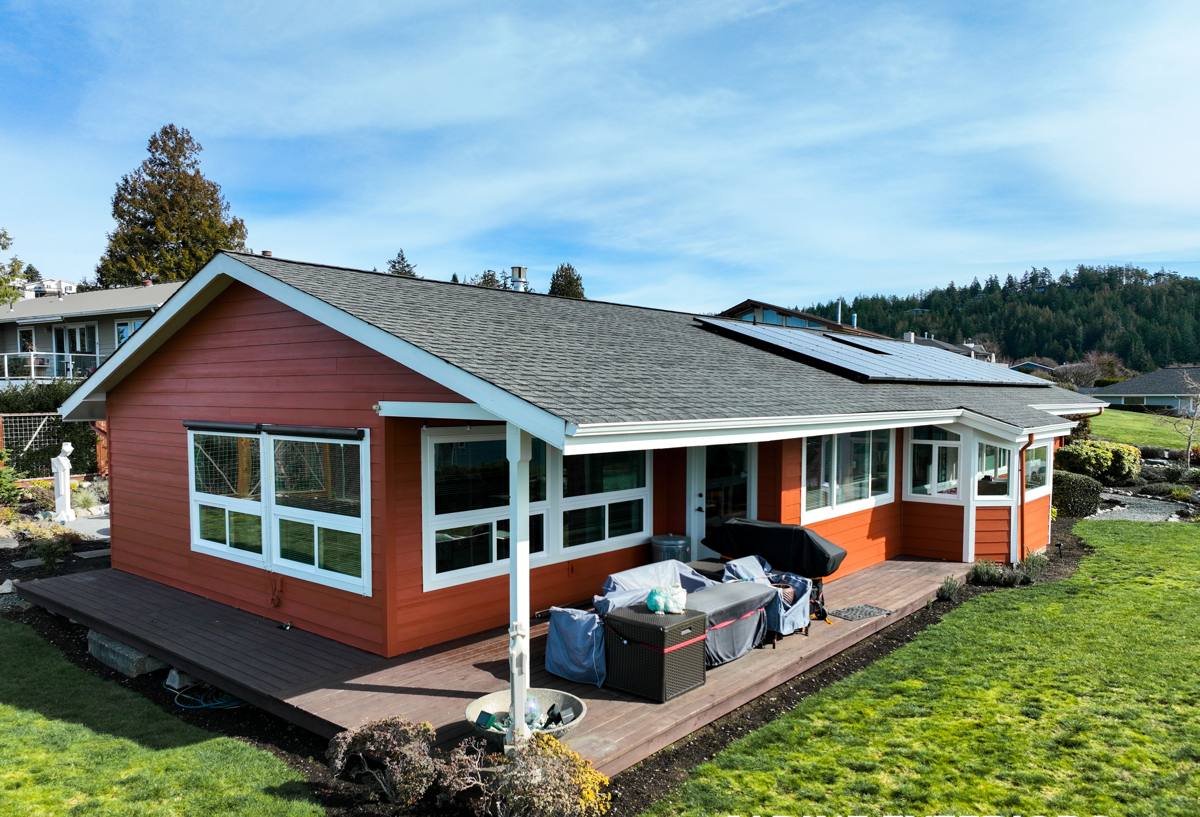
What West Seattle's Climate Actually Does to Siding
West Seattle sits on a peninsula with Puget Sound and Elliott Bay on multiple sides, which means homes here get more direct exposure to salt-laden air than siding installed further inland in King County. Salt air accelerates corrosion on exposed fasteners and metal flashing, and it slowly degrades finishes that aren't formulated to handle it. Add in the region's long stretch of driving rain — rain that doesn't just fall straight down but gets pushed sideways into wall assemblies during winter storms — and you have a climate that actively tests every seam, joint, and fastener a siding crew puts on the wall.
Then there's moss. Seattle's moss season isn't a short nuisance; it's a near year-round condition on shaded, north-facing, and tree-covered walls, and it's longer here than in drier parts of the state. Moss and algae hold moisture against a wall surface far longer than bare siding would on its own, which matters most at horizontal joints, battens, and any spot where water can pool instead of shedding. Board and batten siding has more of those horizontal and vertical intersections than plain lap siding, which is exactly why the installation details matter more here than they would in a drier, less exposed climate.
The Three Climate Stresses That Matter Most for Board & Batten
- Salt air corrosion — attacks exposed or under-spec fasteners, cap flashing, and trim fasteners over years of exposure.
- Driving, wind-driven rain — pushes water sideways into laps, seams, and batten edges rather than letting it run straight off the wall.
- Extended moss and algae growth — holds moisture against the cladding for weeks at a time on shaded or tree-covered elevations.
What Correct Board & Batten Installation Actually Involves
Board and batten is a system, not just a board pattern. Get the assembly wrong underneath the battens and the siding will look fine for a year or two before problems show up as staining, soft trim, or moisture inside the wall cavity. Get it right, and it's one of the more durable profiles available when the substrate is fiber cement.
Behind the Boards
Every correct installation starts with a proper water-resistive barrier installed shingle-fashion so water always drains down and out, never into a seam. Flashing goes at every horizontal transition — window and door heads, water tables, roof-to-wall intersections — before a single board goes up. This is the layer homeowners never see once the job is done, and it's also the layer that determines whether the siding lasts fifteen years or fifty.
The Boards and Battens Themselves
Vertical boards (or a solid panel) go up first, fastened per manufacturer spec with the correct fastener spacing and edge distance. The battens are then installed over the seams, and this is where installation quality shows up fastest — battens need consistent reveal, correct fastener placement that hits framing, and clean, sealed terminations at the top and bottom of the wall. Rushed batten work is the single most common cause of early failures in this siding style, because uneven fastening or missed framing shows up as loose battens within a few winters, not decades.
Fasteners and Trim
In a salt air environment, fastener selection isn't a detail to skip past. Hot-dipped galvanized or stainless fasteners rated for the exposure hold up; standard interior-grade fasteners corrode faster near the water and can streak or fail years before the siding itself would. The same logic applies to flashing metals and trim fasteners — every exposed piece of metal on the wall should be selected for the environment it's actually going into, not just what's cheapest to stock.
Why We Install This Only in James Hardie Fiber Cement
Board and batten can be built out of several materials — wood, engineered wood, vinyl, or fiber cement — and each one behaves differently once it's exposed to years of Puget Sound weather.
Traditional wood board and batten has real appeal and a long history, but it needs consistent repainting and caulking to keep water out of end grain and seams, and in a climate with this much rain and moss exposure, that maintenance burden shows up faster than most homeowners expect. Vinyl board and batten profiles are low-maintenance in one sense, but the panels can distort in temperature swings, the color is baked into the material with no factory refinishing path, and the appearance reads as noticeably more artificial up close — a trade-off that matters on a style people choose specifically for its architectural look. We also don't install primed spruce, LP SmartSide, Cemplank, or Allura board and batten products — not because they're incapable of doing a job, but because none of them match the specific combination of moisture performance, factory-cured finish durability, and long-term warranty backing that James Hardie's fiber cement system offers, and we've made a standard of installing one system correctly rather than several systems at varying quality.
James Hardie fiber cement is non-combustible, engineered specifically for the wetter HZ10 climate zone that covers Western Washington, and finished with the ColorPlus factory-applied coating system rather than field-applied paint. That factory finish is the practical difference homeowners notice first: it's cured under controlled conditions before it ever reaches the jobsite, so it resists the fading and cracking that field-applied paint on wood or engineered wood siding tends to show first, especially on rain- and sun-exposed elevations. Hardie also backs its products with a strong transferable warranty, which matters on a siding style that's meant to last as long as the house.
Our Process, Start to Finish
Every board and batten project follows the same sequence, whether it's a full re-side or an accent wall over an entry.
| Stage | What Happens |
|---|---|
| Site walk & estimate | We assess existing siding, trim condition, and any moisture or moss staining before quoting. |
| Tear-off & substrate check | Old cladding comes off and sheathing is inspected for hidden rot or soft spots before anything new goes up. |
| WRB & flashing | Water-resistive barrier and flashing at every penetration and horizontal transition, installed before boards. |
| Board installation | Vertical Hardie boards or panels fastened to manufacturer spec, checked for plumb and consistent reveal. |
| Batten installation | Battens set over seams with consistent spacing, fastened into framing, terminations sealed top and bottom. |
| Trim, caulking & final check | Corner boards, trim, and touch-up caulking completed, then a final walk-through with the homeowner. |
What Board & Batten Costs to Do Right
Board and batten typically runs somewhat higher in labor than plain lap siding, mainly because of the extra batten installation step and the additional fastening and flashing detail work. We don't publish fixed pricing here because every home's square footage, trim complexity, and substrate condition changes the number, but the factors below are what actually drive the estimate up or down.
| Cost Factor | Why It Matters |
|---|---|
| Wall square footage & story count | More surface area and higher walls mean more material and more labor time, especially with scaffolding or lift access. |
| Existing substrate condition | Rot or moisture damage found during tear-off adds sheathing repair before new siding can go up. |
| Trim and detail complexity | Multiple windows, dormers, and roof intersections each add flashing and cutting time. |
| Full re-side vs. accent application | An accent wall or gable costs less overall but still requires the same correct detailing underneath. |
| Color and finish selection | Factory ColorPlus finishes add a modest premium over field-painted options but remove a recurring repaint cost. |
Maintaining Board & Batten in a Salt Air, High-Moss Climate
Fiber cement board and batten needs far less upkeep than wood, but "low-maintenance" isn't "no-maintenance," especially this close to the water.
- Rinse pollen, salt residue, and road grime off the siding a couple of times a year, focusing on lower walls and areas near the waterline side of the home.
- Check shaded, tree-covered, and north-facing walls for moss or algae buildup each fall and again in spring, and clean gently rather than pressure-washing directly into seams.
- Walk the exterior after major windstorms to look for loose battens, cracked caulking at trim joints, or displaced flashing.
- Keep gutters clear and downspouts directed away from the wall base — pooling water at the foundation line is one of the fastest ways to compromise the bottom courses of any siding.
- Have caulking at trim and batten terminations inspected every few years and refreshed before gaps open up, rather than after water has already gotten behind the wall.
Why It Matters That We Already Work West Seattle
A siding crew that already works this part of King County has already made the calls that matter here — which fastener grade to use given the salt air exposure, how much extra flashing attention a waterfront-facing gable needs versus an inland wall, and which elevations are going to need moss management sooner rather than later. That's not something a crew coming from a drier inland market necessarily gets right on the first job. Board and batten in particular leaves very little room for guessing on those details, because every seam and batten line is a potential entry point if the underlying work is off.
We also know the practical side of working on the peninsula — access constraints on tighter lots, coordinating around weather windows during the wetter months, and sequencing tear-off so a home isn't left exposed to a sudden rain system overnight. None of that shows up in a brochure, but it's the difference between a job that goes smoothly and one that doesn't.
Is Board & Batten the Right Call for Your Home?
Board and batten isn't the right fit for every house — it can be a striking full-facade choice on some homes and a sharper accent detail on others, and part of an honest estimate is telling you which approach actually suits your home's architecture and exposure rather than defaulting to whatever's trending. If you're weighing board and batten against a traditional lap profile, or trying to decide whether an accent application makes more sense than a full re-side, that's exactly the kind of question worth walking through in person before any decision gets made.
If you're considering board and batten siding for a home in West Seattle, we're happy to walk the property, look at what your walls are currently dealing with, and put together a straightforward, no-pressure estimate. There's no obligation — just a clear look at what correct installation would involve for your specific home.